
Emergency dental care is also an access question: the right place to seek help depends on where you are and what care your coverage allows. If you're helping a family member, keep their key health information ready to share with the dental or medical team. Clear information can make the handoff easier.
Table of Contents
- Common Dental Emergencies and the First Thing to Do
- Red Flags That Mean Go to Emergency Care Now
- Safe Steps While You Wait for Care
- How to Save a Knocked-Out Tooth
- Getting Diagnostic Care for a Dental Emergency at Paul L. Gregory, DDS
- Where to Get Urgent Dental Care Near You
- Using Remote Dental Advice Safely
- Emergency Numbers by Country
- Confirm the Next Step Before You Leave Home
Common Dental Emergencies and the First Thing to Do
Tooth disorders generated an average of 1,944,000 emergency-department visits annually during 2020–2022 in the United States, and adults aged 25–34 accounted for the largest share at 29.2%, according to the CDC National Center for Health Statistics data brief. Urgent dental problems aren't rare, and they aren't limited to older adults. Find your situation below, take the first action, then call for the care level shown.
Find your situation fast
| Emergency | Typical signs | First action | Usual care level |
|---|---|---|---|
| Knocked-out permanent tooth | Tooth fully out of its socket | Hold by the crown, rinse briefly if dirty, store in milk or saline | Urgent dentist, within 60 minutes |
| Cracked or broken tooth | Sharp edge, pain on biting | Rinse, cold compress outside the cheek, keep fragments | Dentist the same day |
| Severe toothache | Throbbing pain, sensitivity to hot and cold | Warm salt-water rinse, gentle flossing, label-directed pain relief | Dentist same day or next day |
| Lost filling or crown | Sudden sensitivity, rough edge | Keep area clean, cover with sugar-free gum or temporary dental cement | Dentist within 1 to 2 days |
| Dental abscess | Swollen gum, pus, bad taste | Don't puncture it, avoid heat on the area | Urgent dentist the same day |
| Bleeding that won't stop | Continuous bleeding from gum or socket | Apply firm gauze pressure for 10 to 15 minutes, sit upright | Dentist same day, emergency department if bleeding continues after pressure |
| Facial swelling that spreads | Swelling moving toward eye, neck or throat | Don't wait, call emergency services | Emergency department now |
A few examples show why timing differs. Say a crown comes off at dinner and there's no pain, only sensitivity. You can protect the tooth tonight and call in the morning. Say a permanent tooth is knocked out at football. Minutes matter, so you protect the tooth and travel straight away.
This table helps you choose a first step. It doesn't diagnose the cause.
Pain can come from decay, a crack you can't see, gum disease, or infection under the tooth. Symptoms overlap, and a dentist may need an examination and X-rays to confirm what's happening. If you're unsure which row fits, call a dentist or urgent advice line and describe when it started, where it hurts, and whether there's swelling, fever, or bleeding.
Our articles cite official sources and don't replace medical advice. When in doubt, treat worsening swelling, bleeding, or trouble swallowing as urgent and get assessed in person.
Red Flags That Mean Go to Emergency Care Now
Breathing and swallowing problems can signal a fast-moving emergency, even when dental pain feels mild. Where you seek help depends on the symptoms and what urgent services are available locally. For breathing difficulty, inability to swallow saliva, or rapidly spreading swelling, call emergency services now.
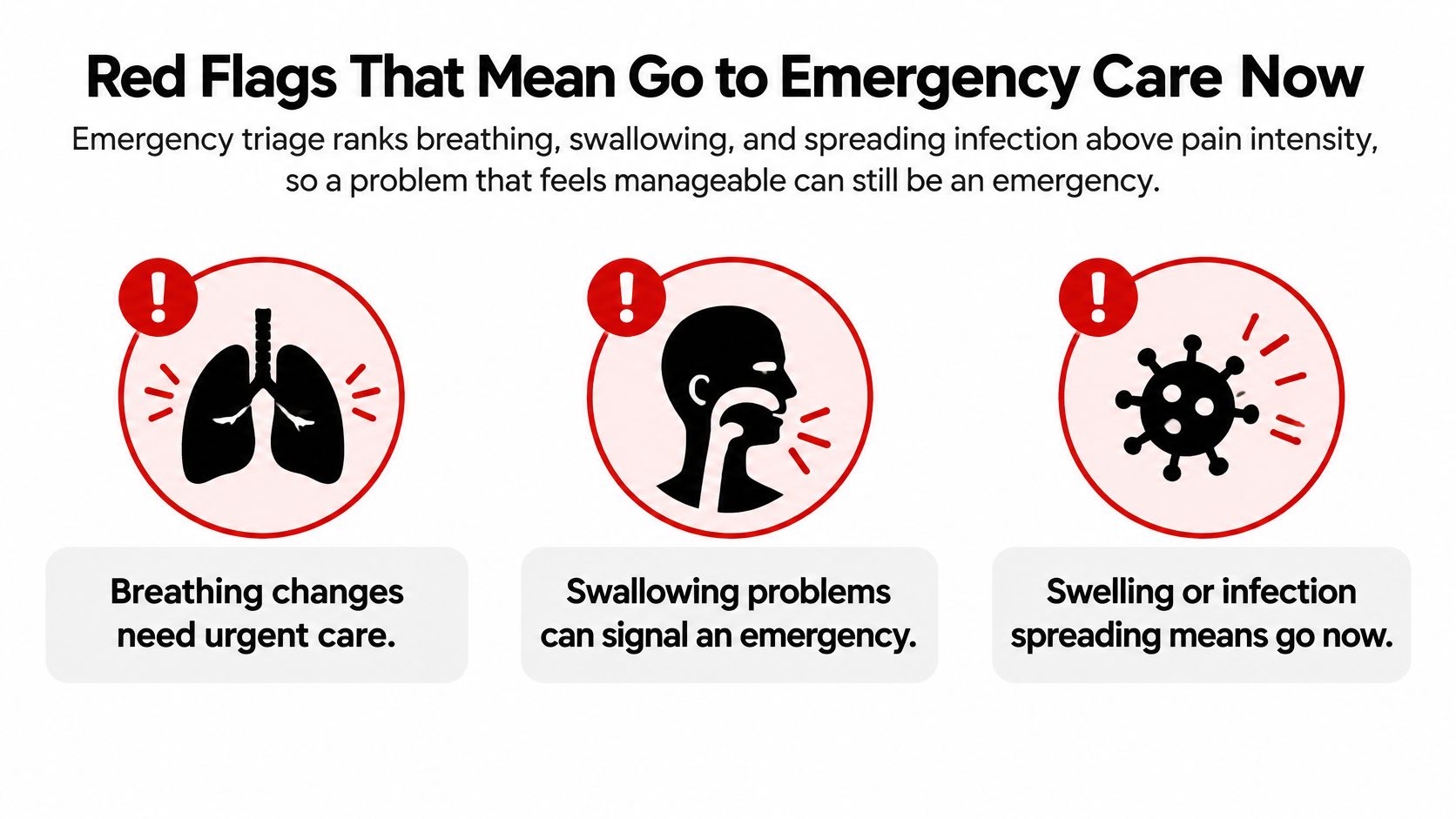
Call emergency services or go now if you notice
- Difficulty breathing or swallowing: Call emergency services now.
- Drooling or inability to swallow saliva: Go to the emergency department now.
- A new voice change: Seek emergency care, especially with facial or neck swelling.
- Swelling spreading across the face, neck, or around the eye: Get emergency assessment now rather than monitoring it at home.
- Trouble opening the mouth: Seek urgent assessment, particularly if swelling is worsening.
- Fever or feeling very unwell: Seek urgent care, especially with facial swelling.
- Uncontrolled bleeding: Apply pressure and seek emergency care if it continues.
- Vomiting, double vision, or loss of consciousness after a facial or head injury: Call emergency services.
Spreading facial swelling, difficulty opening the mouth, trouble swallowing, voice changes, or breathing problems need urgent assessment. The emergency team can determine whether hospital or specialist oral and maxillofacial care is needed. Antibiotics alone may not address the cause: treatment can require drainage or definitive dental care.
Localised toothache without signs of spreading infection usually needs dental assessment and treatment, such as pulp treatment, root-canal treatment, or drainage. Antibiotics may be considered when symptoms affect the whole body, such as fever or feeling unwell. A dentist or emergency clinician can assess the situation and decide what care is appropriate.
Before setting off, write down when symptoms began, how swelling has changed, any temperature reading, and changes in swallowing or breathing. Include medicines, allergies, immune problems, and when pain relief was last taken. If a family member or caregiver is coordinating help, a guide to emergency call buttons can help with general preparedness, but it does not replace emergency assessment.
Safe Steps While You Wait for Care
Start with a gentle rinse. The image below shows the basic salt-water method you'll use in step 1.
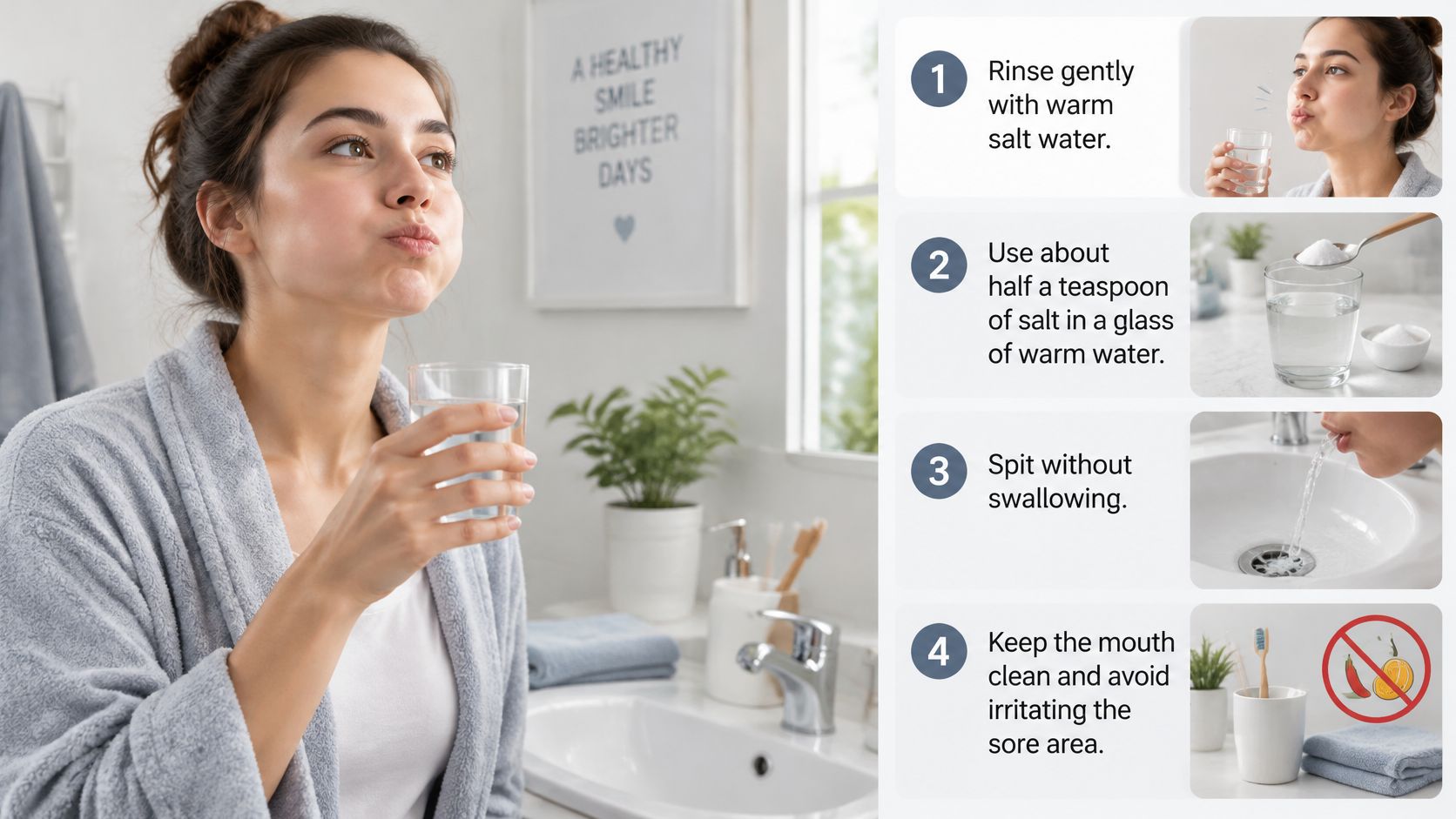
Comfort measures can help you cope until you're seen. They don't treat decay, a crack, or infection, so keep your appointment even if pain eases.
Steps you can follow at home
- Rinse gently with warm salt water, about half a teaspoon of salt in a glass of warm water. Spit it out without vigorous swishing, which can irritate sore tissue.
- Use a cold compress on the outside of your cheek for 15 to 20 minutes at a time, with breaks between. Cold can ease swelling and throbbing.
- Take over-the-counter pain relief only as the label directs. Check with a pharmacist if you take other medicines, have allergies, or aren't sure what you can take.
- Never place aspirin directly on the gum or tooth. It can burn the tissue and make the area harder to assess.
- Keep your head raised when lying down and avoid chewing on the painful side. Pressure often makes inflamed teeth hurt more.
- Choose soft, lukewarm food. Avoid very hot, very sweet, or very cold drinks, alcohol, and smoking while you wait.
- Brush and floss gently around the sore area. Removing trapped food sometimes reduces pressure, but don't force floss if it causes bleeding.
- Write down each painkiller dose and any changes. Note the time, temperature if you can take it, and whether swelling spreads.
Watch the short video below for a visual reminder of these waiting steps before you travel.
If you're helping someone who can't describe pain clearly, watch for refusing to eat, drooling, holding the face, disturbed sleep, or new agitation. Treat those changes as a reason to call for advice promptly.
How to Save a Knocked-Out Tooth
A knocked-out permanent tooth is time-critical. Cells on the root surface lose viability outside the mouth, so fast, gentle handling gives the tooth its best chance.
The infographic below puts the core rules in order.
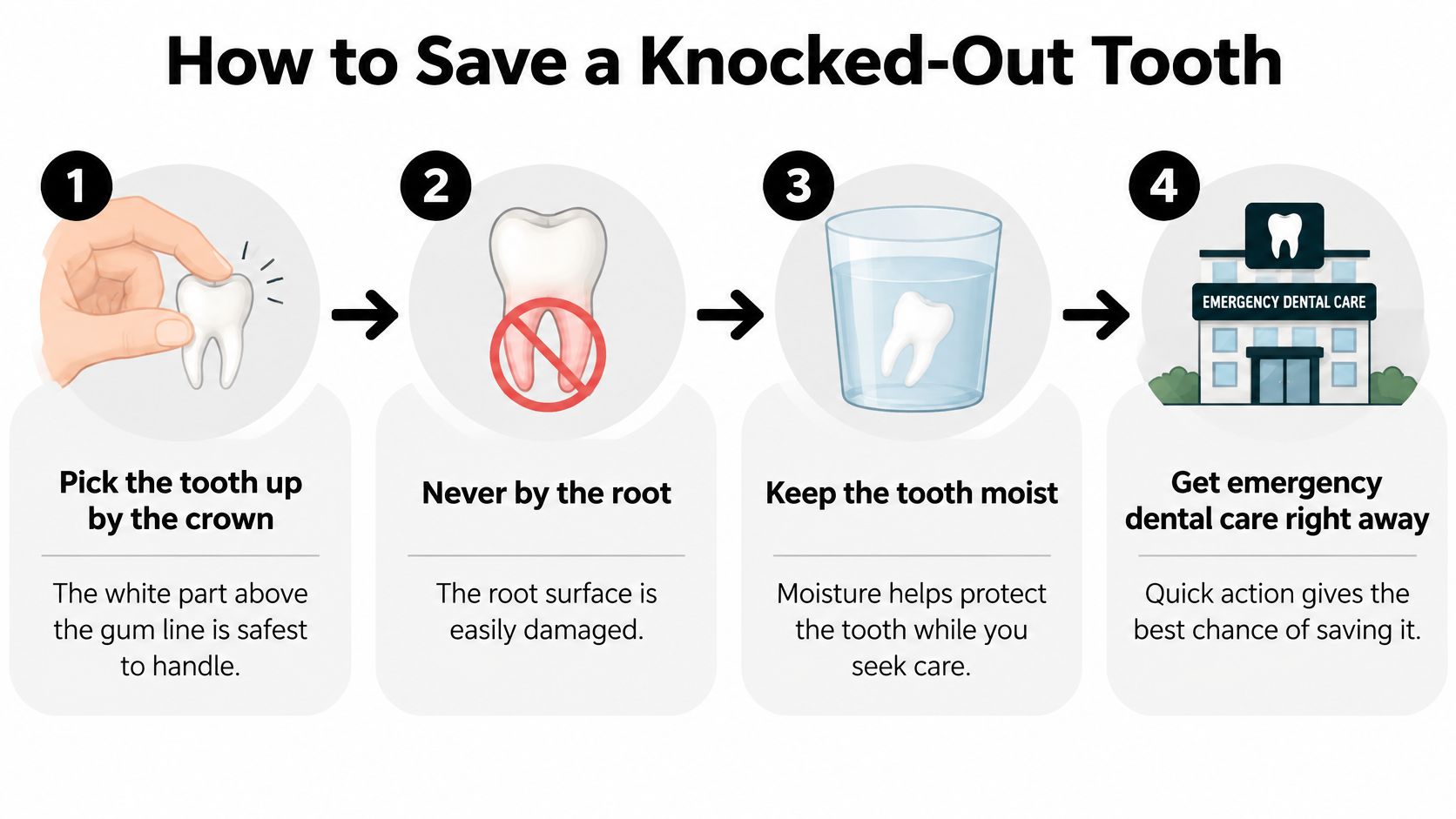
Do this in order
- Pick the tooth up by the crown. That's the white part normally above the gum line. Don't touch the root, because its surface is easily damaged.
- Rinse briefly if it's dirty. Use milk or saline if available. Don't scrub, scrape, use soap, or wrap it in tissue.
- Try to place it back only if the person is calm and able. Face it the right way, slide it gently into the socket, and hold it with clean gauze or by biting lightly on a cloth. Don't force it.
- Keep it moist if you can't reinsert it. Use cold milk or a saline-based storage solution. A conscious older child or adult who can hold it safely may keep it between cheek and gum. Don't store it dry, and don't use that cheek method if there's a risk of swallowing.
- Seek urgent dental care straight away, ideally within 60 minutes. International trauma guidance recommends replantation as soon as possible, ideally within 60 minutes, and after approximately 60 minutes of dry extra-oral time the periodontal ligament's prognosis becomes poor, according to international dental trauma guidance summarised in PubMed Central.
- Record the details. Write down the injury time, storage method, symptoms, witness details if relevant, and where you're going.
- Call emergency services first for wider injuries. That includes loss of consciousness, vomiting, double vision, major facial or jaw trauma, persistent bleeding, or swelling that affects breathing.
Practical rule: Handle the crown, keep the tooth moist, and start travelling. Don't spend valuable minutes cleaning it perfectly.
The baby tooth exception
Don't put a baby tooth back in. Replanting it can harm the developing adult tooth underneath. Control bleeding with gentle gauze pressure, comfort the child, and take them to a dentist promptly for assessment.
At the appointment, the dentist decides about stabilisation, radiographs, tetanus assessment, and follow-up. They'll also plan checks for complications such as pulp necrosis, inflammatory root resorption, or ankylosis. Nobody at home should predict whether the tooth will survive. Your job is speed, moisture, and a clear record of times.
If the tooth is only loosened or pushed out of position, don't try to move it yourself. Avoid biting on it and get same-day dental assessment.
Getting Diagnostic Care for a Dental Emergency at Paul L. Gregory, DDS
In Midtown Manhattan, where you go for urgent dental care can affect how quickly you get an assessment and what happens next. Paul L. Gregory, DDS, is at 57 W 57th St near Central Park South and Columbus Circle. When you call, explain the problem first, then ask what the practice can assess and treat.
A short call can clarify your options before you travel. Ask:
- Can you assess me today? Describe the symptoms and when they began. Mention any swelling, injury, bleeding, or broken dental work.
- What diagnostic checks might be needed? Ask how the dentist will assess the problem and whether any tests or imaging may be part of the visit.
- Can you treat the likely cause? Explain what has happened and ask whether the practice handles that type of problem or may refer you elsewhere.
- What should I expect to pay, and how does coverage work? Ask about fees, payment, and whether you need to check benefits with your insurer.
- What follow-up might be needed? Find out whether further visits or care from another provider may be part of the plan.
Symptoms do not always reveal the source of a problem. A damaged crown, for example, may need repair, while pain nearby could have a different cause. The assessment helps the dentist explain what is happening and discuss possible next steps.
If you are comparing nearby practices, this overview of emergency dental care can help you prepare questions for your call. Confirm the appointment time, fees, and likely next steps before setting out.
Where to Get Urgent Dental Care Near You
Where you go determines what gets fixed. An emergency department can stabilise you, but a dentist usually provides the definitive repair.
Coverage also shapes that choice. In the United States, about 10.7 million adults reported visiting an emergency department for an oral-health problem in the previous year, and the rate was 9% among adults with Medicaid dental coverage compared with 2% among those with private insurance, according to the CareQuest Institute State of Oral Health Equity in America report. Income, geography, language, and availability affect access, not just symptoms.
Compare your options
| Option | Best for | Main limit |
|---|---|---|
| Emergency department | Uncontrolled bleeding, facial swelling affecting breathing or swallowing, major trauma, fever with spreading infection | Usually gives pain relief and stabilisation, not definitive dental repair |
| Emergency or on-call dental practice | Knocked-out tooth, broken tooth, lost crown, abscess without whole-body signs | Hours and availability vary, may need a phone assessment first |
| Regular dentist with a same-day slot | Known patients with toothache, filling or crown problem | Same-day slots are limited and may fill early |
| Telephone or video triage | Deciding where to go and what to do until then | Cannot examine the tooth, see the next section for safe use |
How to find help quickly
- Call your usual practice first. Listen to the full out-of-hours message, which often names the on-call dentist.
- Check trusted directories. Try your regional dental association or a dental school clinic directory.
- Ask local health services. Your general practitioner, local health centre, or pharmacy staff may know current local listings.
- Ask four phone questions. Do you see emergencies today? What's the fee and do you accept my coverage? What should I bring? Can you take a referral if I've already had remote advice?
Bring a medication and allergy list, symptom timeline, insurance details, and any tooth fragments or the crown that came off. If you're arranging care for an older, disabled, or cognitively impaired person, assign one person to confirm transport, costs, and follow-up. After emergency department treatment, book the dental appointment before you leave if you can, because the underlying tooth problem usually remains.
Using Remote Dental Advice Safely
A remote consultation can help you choose the right next step, much like a map helps you find a route. It cannot show everything an in-person examination can, especially when infection, injury, or uncontrolled bleeding is involved.
A 2025 review of teledentistry reports that digital dentistry may reduce unnecessary visits and help triage demand. Access can still be affected by cost and reimbursement, local rules, internet connection, or difficulty using digital tools.
Use this workflow
- Prepare before the call. Gather the person's medications, allergies, medical conditions, symptom timeline, and pain score.
- Take clear photos if asked. Use daylight or a bright room, gently move the cheek aside, and include any facial swelling.
- Ask what changes the plan. Confirm which symptoms mean the person needs an in-person assessment or emergency help.
- Clarify where to go. Ask which service will receive the referral, where it is located, and how soon the person should be seen. Check the likely cost and whether the service accepts the person's coverage before travelling.
- Agree who will follow up. Decide who will confirm that the appointment happened and report any worsening symptoms.
- Check the clinician's licence. The clinician should be licensed where the patient is located.
Remote advice is for orientation and triage. If symptoms call for urgent in-person care, do not wait for another remote appointment.
For a family member or caregiver, write down observations with their times and arrange for someone nearby to help with the visit if needed. Keep the recommendation, any images sent, and referral details together so the next clinician can quickly understand what has happened.
Emergency Numbers by Country
Emergency numbers vary by country, while urgent dental care is usually arranged locally. Save both numbers in your phone before you need them. For a life-threatening emergency, call the national emergency number first.
| Country | Life-threatening emergency number | Urgent dental route |
|---|---|---|
| United States | 911 | Contact a local dental society or go to an emergency department |
| Canada | 911 | Check provincial dental services or go to an emergency department |
| England, United Kingdom | 999 or 112 | Call NHS 111 for direction to urgent dental help |
| France | 15 or 112 | Check the regional dental on-call listing through Service-Public.fr |
| Germany | 112 | Check the local dental emergency service |
| Australia | 000 | Contact a local dental emergency service or go to a hospital emergency department |
Dental routes can depend on your location and on-call hours. In England, NHS 111 can direct you to urgent dental help. In France, use the regional on-call listing. In the United States and Canada, local services can help identify an appropriate dental provider.
If you are travelling, check the local emergency number and dental route when you arrive. Keep them on a wallet card as well as in your phone, and call the dental service before setting out to confirm where to go and whether it can see you.
Confirm the Next Step Before You Leave Home
Before leaving, make sure one person is coordinating the next steps. If red flags are present, or someone is unconscious, struggling to breathe, or bleeding heavily, call emergency services now. Otherwise, contact a dentist or an on-call dental service and confirm where and when to get care.
Gather this before you leave
- Dentist details: Phone number, address and appointment time.
- Medication and allergy list: Include over-the-counter products and when the last painkiller was taken.
- Timeline: Note when the injury or symptoms began and how they have changed.
- The tooth, if knocked out: Carry it in milk or saline, or leave it safely reinserted if it is already in place.
- Update list: Identify the family members or professionals who need to know the plan.
Choose one coordinator, such as a family member, caregiver or home-care professional. They can confirm the appointment, arrange transport, share updates and book follow-up after an emergency department visit. Shared home-care coordination can help clarify who is responsible for each handover.
Tribulys can keep important contacts, the emergency information sheet, appointment reminders and follow-up tasks in one shared space. The Essentiel plan includes important contacts and the emergency information sheet. Events such as appointments can include a date, time and recurrence, with reminders for relevant members. Start by inviting the people involved day to day. The doctor can join later. Tribulys does not replace a dentist or emergency services.
Save your emergency numbers and confirm the follow-up appointment before the day ends.