
Say you're a home caregiver starting a new placement, or a volunteer coach due at practice this weekend, and you're asked for a current CPR card before your first shift. You finished a cheap course on your phone last night, passed the quiz, and printed the certificate. Then the coordinator shakes her head. She needs a card that proves someone watched you do compressions, not just a record that you completed lessons.
That gap is where many learners waste money, and it's why the best online CPR certification for you depends first on who must accept the card. A family refresher can be simple and fully online. A workplace or healthcare credential usually can't.
Each pick below is weighed on five things: whether a skills check is included or sold separately, whether the issuing provider is widely recognized, what the listed price covers, scheduling and format, and fit for family caregivers versus workplaces or healthcare roles. Two options in the list teach CPR without issuing a card at all, and the notes on each explain why they don't replace one. These are US-based providers, so if you're outside the US, confirm local recognition with your employer or the relevant official body before enrolling. Prices and terms below reflect provider listings at the time of writing, and promotional pricing can change, so confirm the current cost on the provider's site before you enrol.
An online course completes the learning, but it does not automatically qualify as a workplace certification.
Table of Contents
- 1. ProMed Certifications
- 2. American Heart Association - Heartsaver Blended Learning
- 3. American Red Cross - CPR/AED Blended Learning
- 4. National Safety Council - CPR and AED Blended Training
- 5. Emergency University - Hands-On Xpress
- 6. HSI - Online Courses and Skills Verification
- 7. ProTrainings - Online CPR With Optional Live Skills Evaluation
- 8. American Academy of CPR and First Aid - Online or Blended Courses
- 9. American Health Care Academy - CPR/AED and BLS Courses
- 10. American Heart Association - CPR Anytime Kits
- Online CPR Certification Options at a Glance
- Pick the CPR Card Your Organization Will Actually Accept
1. ProMed Certifications
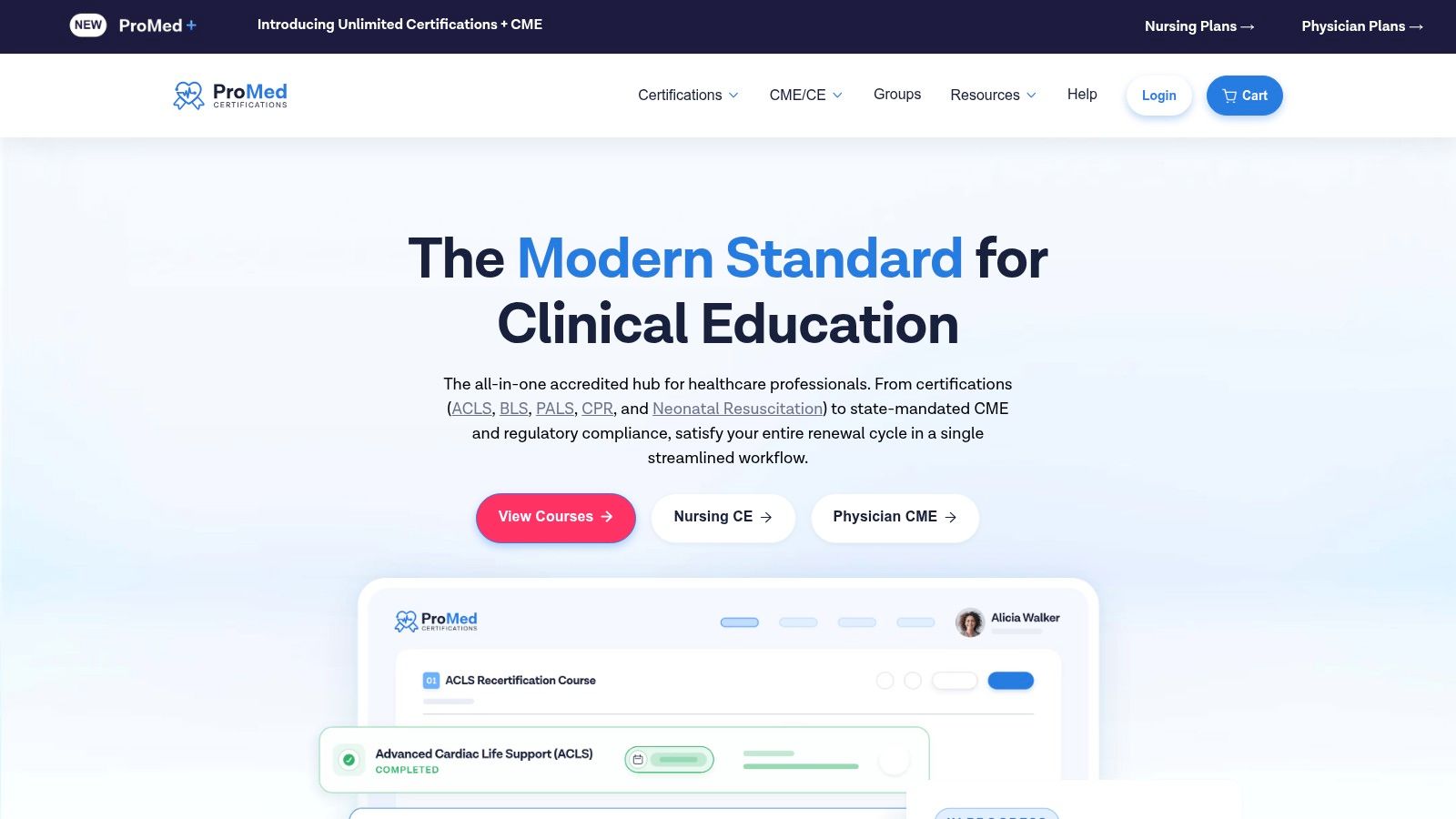
ProMed Certifications is built for healthcare professionals who need to renew clinical credentials without giving up a full day to a classroom. Alongside CPR, it offers ACLS, PALS, BLS and Neonatal Resuscitation, so a nurse or physician who needs several cards can handle them in one place instead of juggling separate providers and expiry dates. You study at your own pace, which suits shift workers who learn in short gaps. The card records online course completion, so the acceptance route here is simple to describe: your credentialing office agrees to honor a completion credential.
Where ProMed fits best
The practical appeal is the acceptance safety net. On its online CPR certification page, ProMed states that its certifications carry an acceptance guarantee backed by a money-back offer if an employer refuses the card. That doesn't remove your job of checking first, and I'd still ask your credentialing office in writing, but it lowers the financial risk of a rejected card. Organizations also get a Group Portal to manage employee certifications in one dashboard rather than chasing individuals for copies.
ProMed bundles continuing education on top. Its nursing CE platform offers accredited content including pharmacology and DEA MATE Act training, instant certificates and automated reporting to CE Broker and state boards, with an option to bundle CE with certifications. The physician CME side works similarly, with accredited content, automated board reporting and a combined CME plus certification option.
If you're a clinician whose employer accepts this route and you value bundling and admin tools over a locally issued card, ProMed is a strong fit. If your employer names a specific provider, follow that instruction instead, because no guarantee overrides a written workplace policy.
2. American Heart Association - Heartsaver Blended Learning
If your employer said the words "AHA card," start here and don't shop around. Heartsaver CPR AED is designed for people with little or no medical training who need CPR for work. You complete the coursework online at your own pace, then demonstrate skills with an instructor or, where available, an approved skills station. That second step isn't optional decoration. The American Heart Association's HeartCode guidance states that courses involving CPR skills require a hands-on skills session to receive an official course completion card, and that card is valid for two years.
What you actually pay for
The online portion is listed at $19.50 on the AHA course page, with the skills session priced separately by the training center, so your total depends on where you live. Budget for both parts before you start, and check local availability first. An online completion email alone won't satisfy an employer who asked for the eCard.
- Course scope: Adult CPR, AED use and choking response, with child and infant options
- Best for: Childcare, fitness, coaching and workplace roles naming AHA
- Watch out for: Thin skills-session availability in rural areas
For caregivers, it's also worth thinking about how this training sits alongside everyday home safety planning, such as knowing how emergency alert systems work, which we cover in our guide to the emergency call button for home care. The card proves assessed compressions and AED handling. That's exactly why employers trust it.
3. American Red Cross - CPR/AED Blended Learning
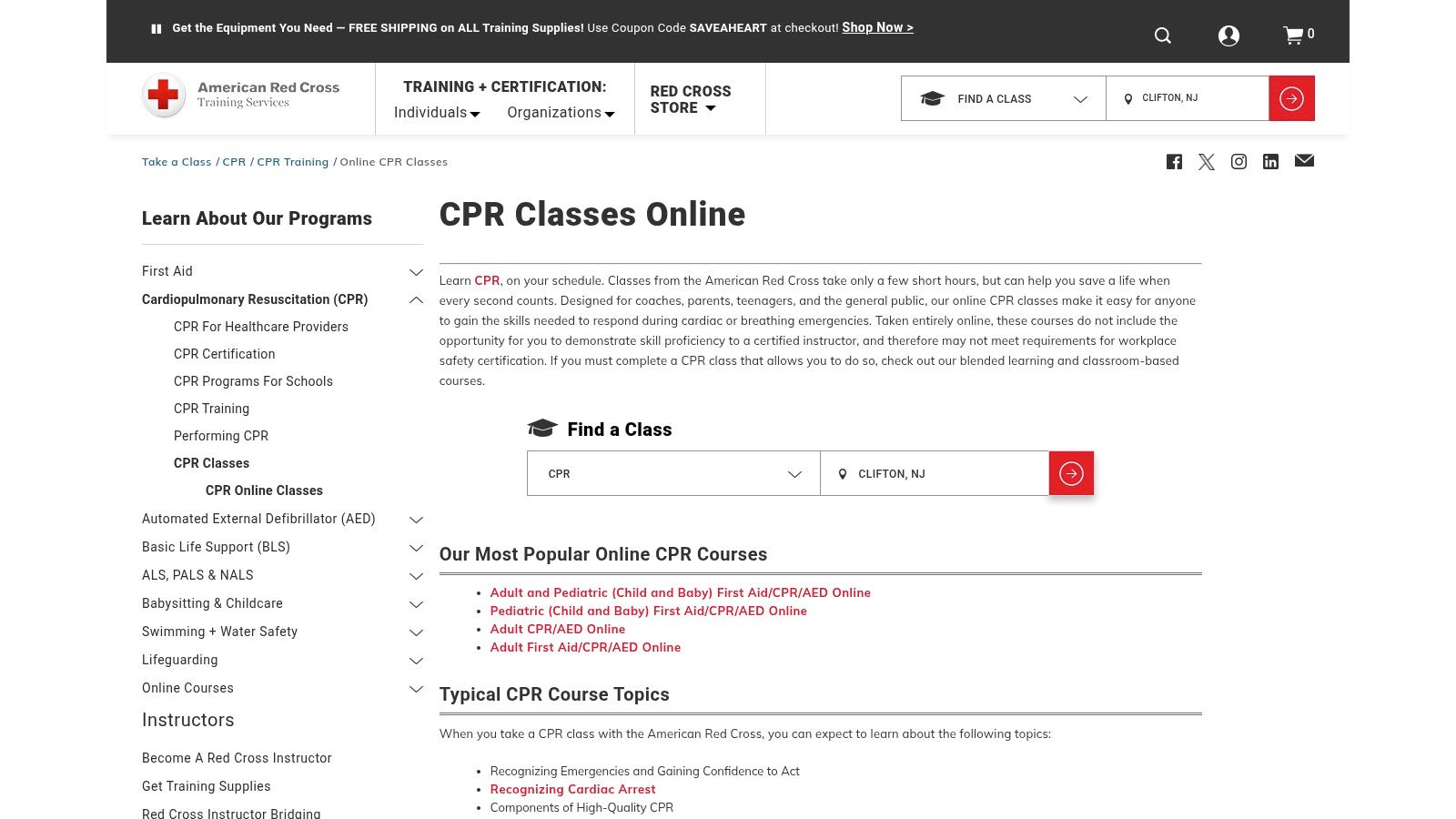
The Red Cross sells three formats, online, in-person and blended, and picking the wrong one from the list is the most common mistake I see described by frustrated learners. For workplace certification, choose a blended CPR course with an instructor-led skills session. The American Red Cross certification guidance states that successful completion of an in-person or blended course produces a certification valid for two years, and that an online-only course without an in-person skills session may not satisfy workplace requirements.
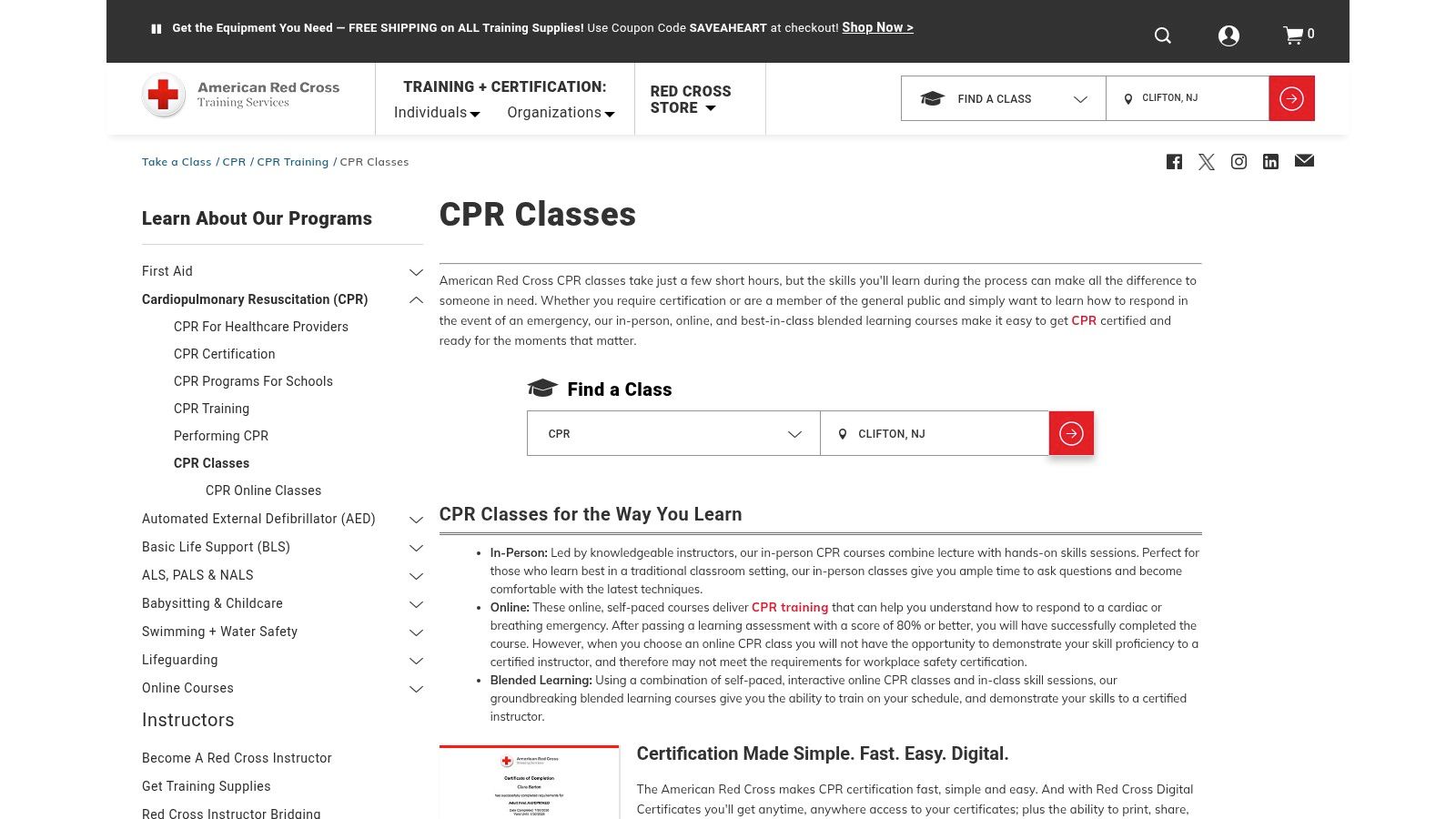
Why the format name matters
Online modules handle recognition of cardiac emergencies, activation of emergency services and AED concepts well. They can't verify compression depth and rate, rescue breathing technique or AED operation under observation. Blended learning closes that gap while keeping most study at home.
- Formats: Adult and pediatric CPR/AED and first aid combinations
- Verification: Digital certificates checkable by ID or QR code
- Healthcare route: Separate BLS options for clinical and public safety roles
Pricing varies by course, format, and location, so read the listing carefully and confirm you're purchasing the certification pathway, not the awareness course. The provider name is widely recognizable to employers, schools, and volunteer organizations, which removes one layer of doubt at onboarding. If your organization said "get CPR certified" without naming a provider, a Red Cross blended course is one of the safest default choices you can make.
4. National Safety Council - CPR and AED Blended Training
Workplace safety managers tend to like the National Safety Council because it labels its products clearly. Its course pages distinguish an e-learning completion certificate from full certification, which only follows a hands-on skills session. That clarity matters, because a systematic review comparing online, hybrid and instructor-led CPR training found online methods could produce equal or higher competence in actions such as scene safety assessment, calling for help, hand placement and compression rate, while also finding substantial variation in course content and assessment. No one should assume every online certificate proves the same thing.
Costs and scope
The NSC CPR and AED training page lists CPR and AED e-learning at $29.95, or $23.95 for members, with the hands-on assessment as a separate step and cost. The course focuses on cardiac emergencies rather than full first aid, which suits organizations that already cover first aid separately.
The trade-off is coordination. Someone has to schedule instructors, gather staff and track who finished only the online half, since the completion certificate alone does not produce the card. If you're an individual caregiver without an employer arranging the practical session, an AHA or Red Cross class search may get you a skills date faster. For an organization certifying many employees under one system, NSC's structure is the cleaner tool.
5. Emergency University - Hands-On Xpress
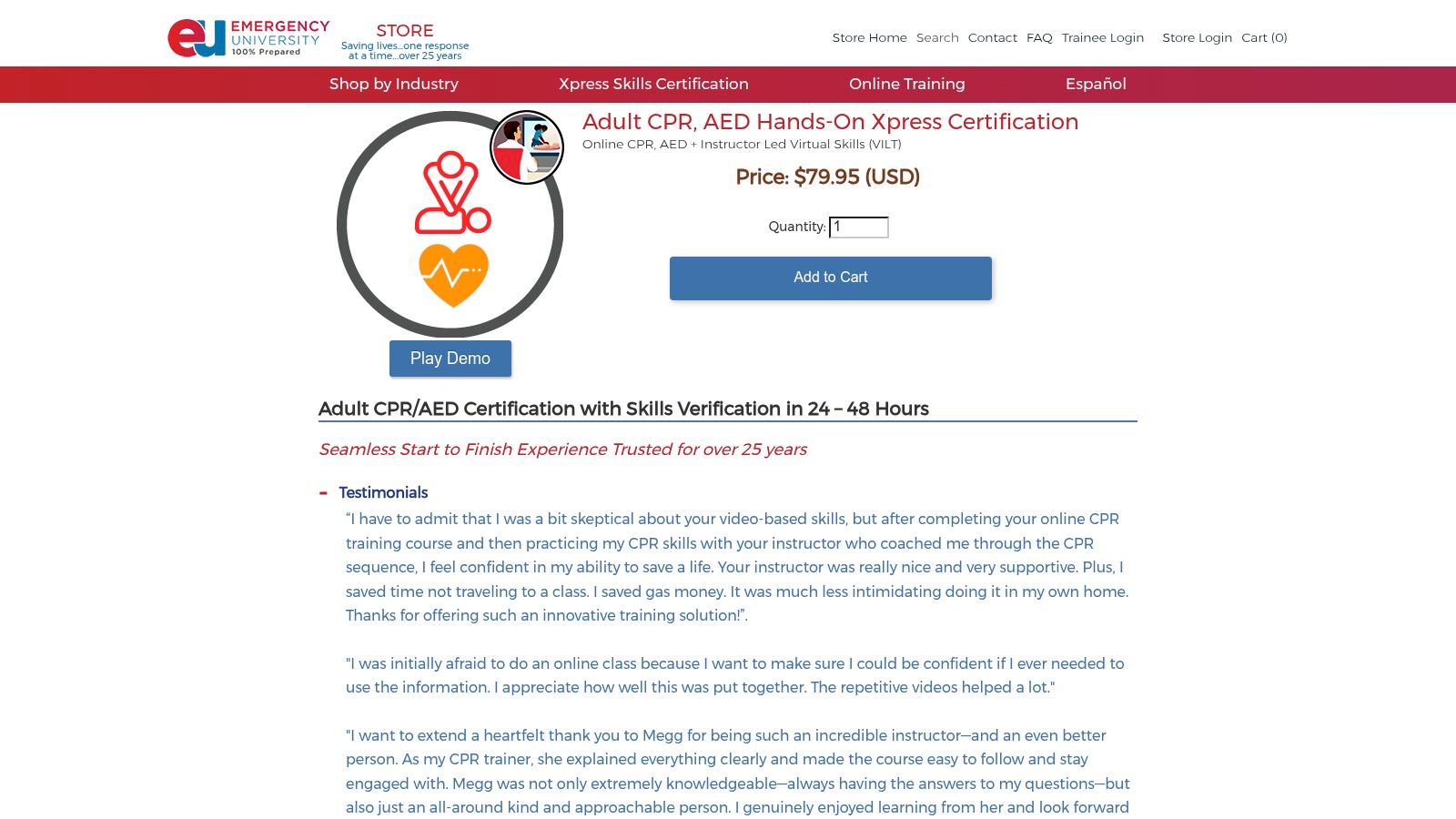
What if you need skills verification but there's no classroom within a reasonable drive? Emergency University's Hands-On Xpress pairs online instruction with a live, one-to-one virtual session where an instructor watches and evaluates your technique. The Adult CPR/AED package listing prices that skills-verified package at $79.95, with skills verification included as advertised rather than added later.
That single listed price makes comparison easier. With blended AHA or NSC routes, you're adding a separate training-center fee you can't see until you search locally. Here you know the package cost upfront, though you do pay more than online-only courses charge.
Before you book the video session
- Confirm acceptance: Ask your employer whether a live virtual assessment counts
- Check your setup: You'll need suitable technology, camera positioning and floor space
- Pick the right variant: Pediatric, first aid and healthcare-related versions exist
I'd recommend this route for rural learners, traveling workers and caregivers whose schedules make classroom attendance hard, provided the accepting organization approves virtual verification in advance. Get that approval by email. A remote skills check is a real assessment, but some regulators still specify in-person testing, and you don't want to learn that after paying.
6. HSI - Online Courses and Skills Verification
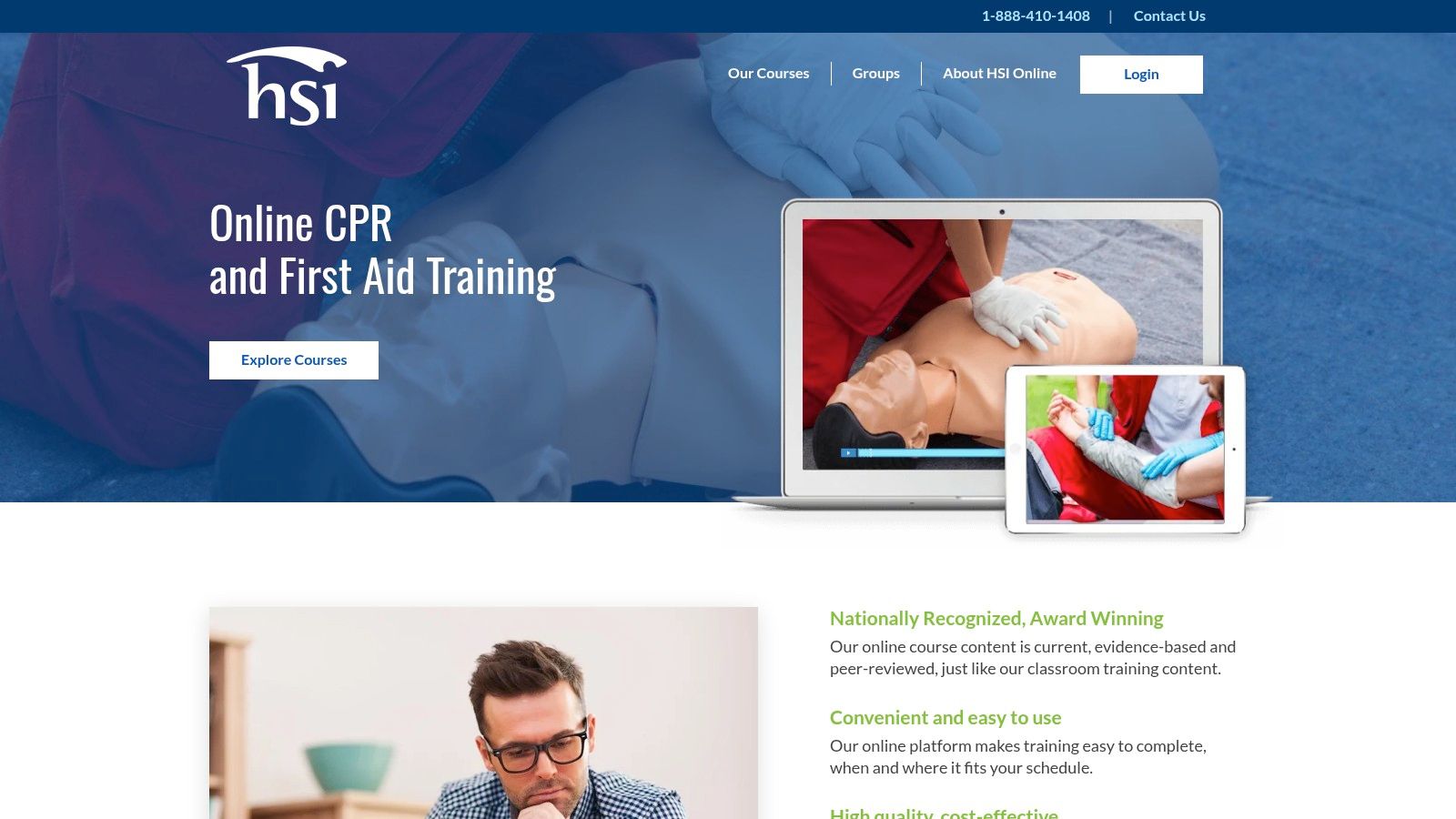
HSI works well for people who aren't yet sure which level of verification they'll need. You can start with self-paced online CPR and AED study, then use an authorized training center when practical skills verification is required. Some eligible courses offer Remote Skills Verification, where you demonstrate skills live to an authorized instructor. The HSI online course catalog lists Adult CPR/AED at $24.95 and BLS at $29.95, with saved progress so you can stop and resume.
HSI deserves credit for stating plainly that an online training certificate may not satisfy employers requiring hands-on assessment. That honesty helps you plan. A systematic review of adult basic life support education found training generally increased confidence and willingness to perform CPR, while frequent retraining with hands-on practice appeared to improve skill retention. Confidence gets you started in an emergency. Practice keeps your compressions effective.
Course options cover adult only, and adult, child and infant combinations, plus first aid and BLS. That range serves family caregivers, workplaces and healthcare learners from one catalog. The catch is that full certification pricing and scheduling depend on the pathway and training center you choose, so confirm the total before you begin. Treat the online price as the entry ticket, not necessarily the final cost of the card your employer wants.
7. ProTrainings - Online CPR With Optional Live Skills Evaluation
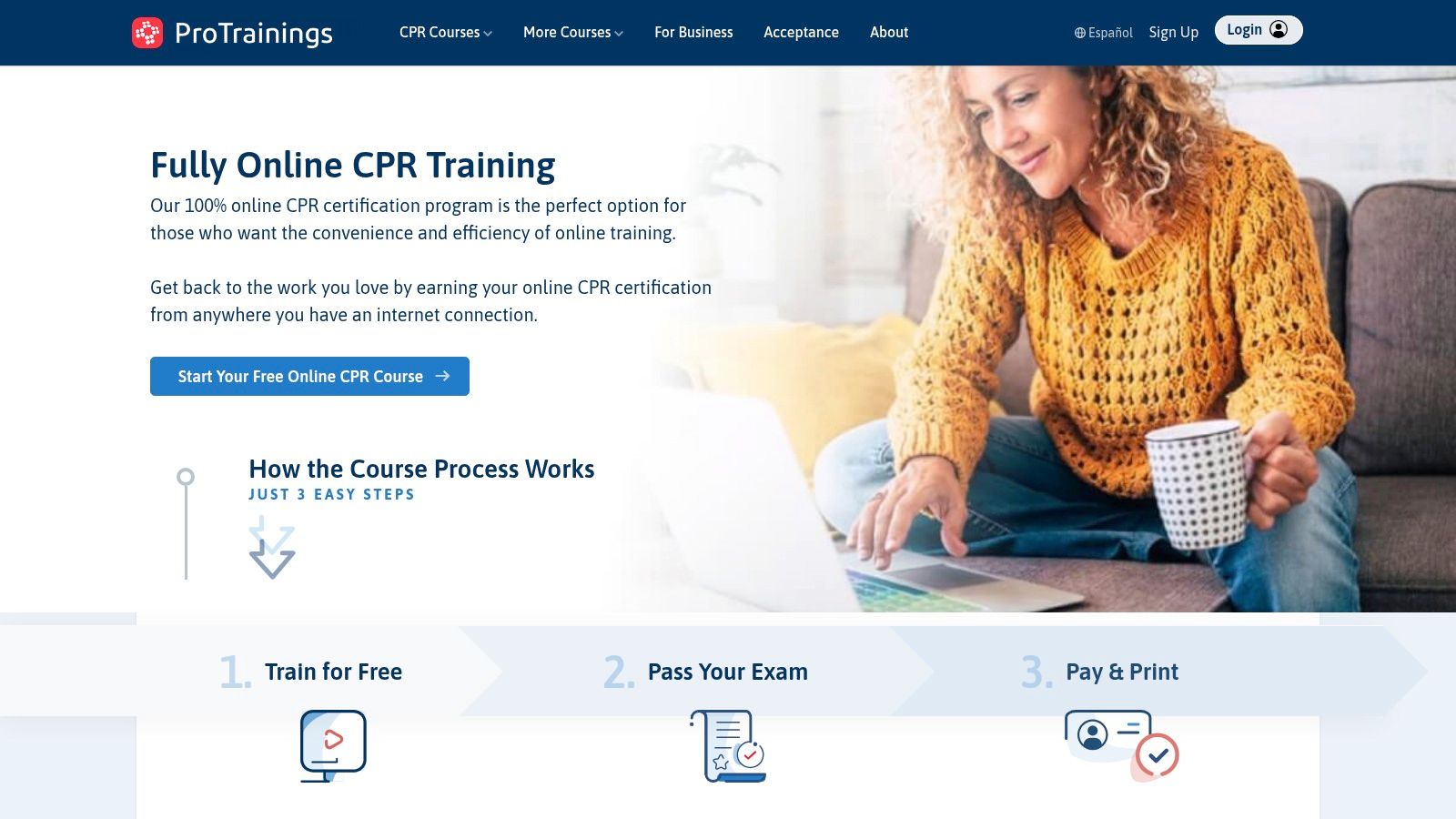
ProTrainings is the flexible middle ground. Start with self-paced video lessons, and if your employer requires a skills assessment, add a mailed manikin kit and a live video session with an instructor. In 2025, the ProTrainings all-ages CPR, AED and first aid course page listed the course at $39.95, with certification valid for two years. The broader ProTrainings online CPR catalog covers adult, all-ages and healthcare BLS versions, with English and Spanish audio and captions on listed courses.
Run the full price before enrolling
The online course alone proves completion. The skills evaluation route is what shows an instructor watched you perform compressions and related skills, so treat it as a different level of proof rather than an add-on with trivial cost. BLS and the SUMO skills evaluation kit are listed separately, which means the total can rise well above the base course price once the kit and live session are included. Check the full price, including shipping and scheduling, on the provider site before enrolling. ProTrainings says acceptance ultimately sits with the employer and describes an acceptance-related refund process, which softens the risk but still leaves the decision with your organization.
- Good fit: Self-directed learners who may need remote assessment later
- Needs planning: Kit shipping time, camera and a stable connection
- Acceptance route: Confirm the employer recognizes a ProTrainings card and the chosen evaluation format before paying
8. American Academy of CPR and First Aid - Online or Blended Courses
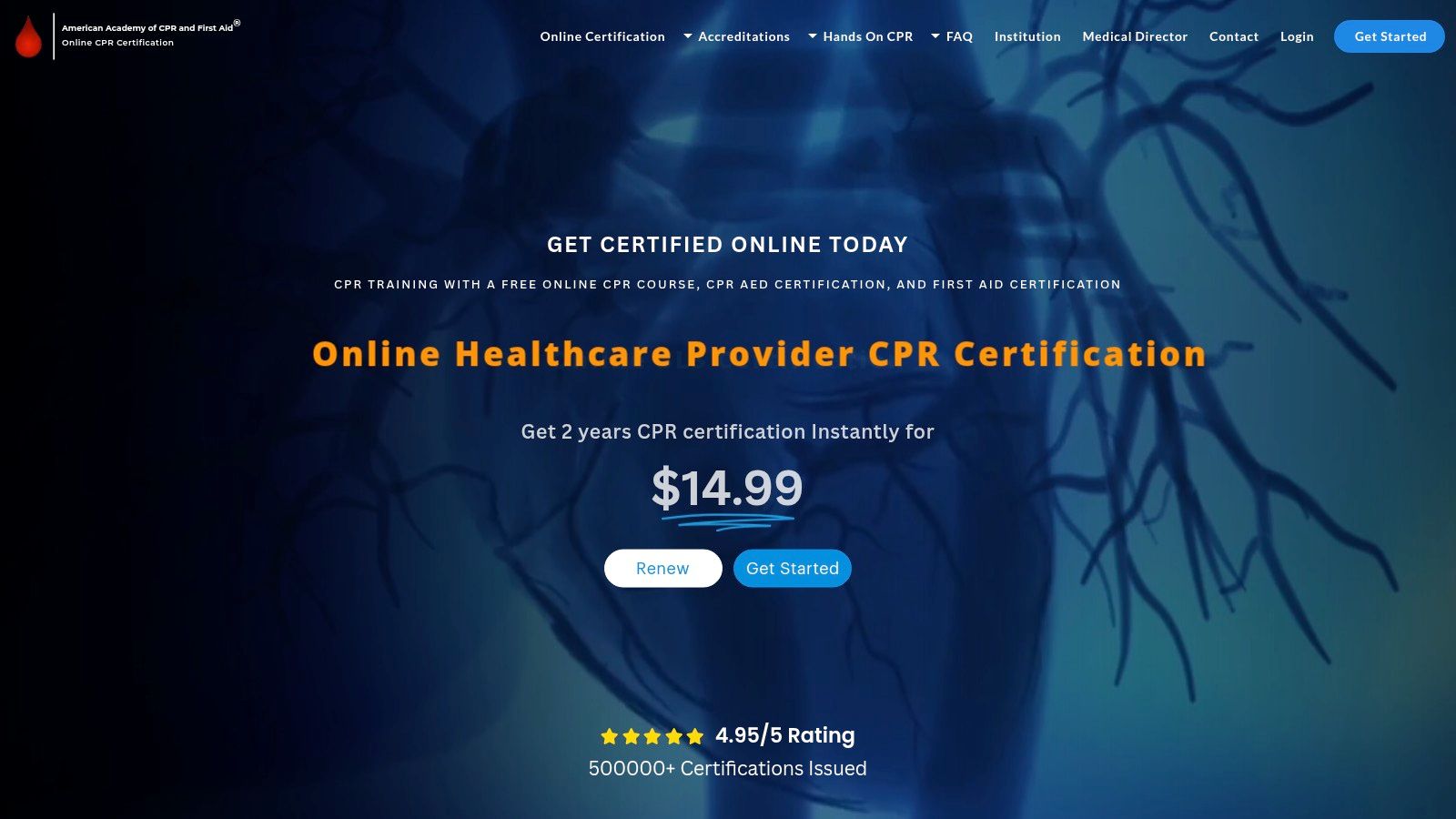
The appeal here is a low entry price and the ability to look before you pay. The American Academy of CPR and First Aid site lists online adult CPR at $14.99, and its FAQ says online materials and the exam can be accessed before payment. For a family caregiver who wants to learn the concepts tonight and decide later about formal certification, that's a low-risk way to start.
The provider also offers a blended route with live skills verification. It estimates $99.99 for the blended hands-on option on its pricing information, including course, assessment and manikin costs. That itemized estimate is helpful, and it shows the distance between online-only study and a skills-verified card. The cheap price proves knowledge learning. The blended price buys observed performance.
Courses span adult CPR, first aid, BLS and healthcare provider options, with continuing education credits listed for some courses. Before enrolling for a job requirement, confirm two things with the accepting organization. First, whether this provider's card is recognized at all. Second, whether the fully online route meets their skills assessment rule, because for many employers it won't. Used for personal preparedness, or as a study step toward the blended option, the low-cost online course makes sense. Used as a guessed substitute for a required workplace card, it's a false economy.
9. American Health Care Academy - CPR/AED and BLS Courses
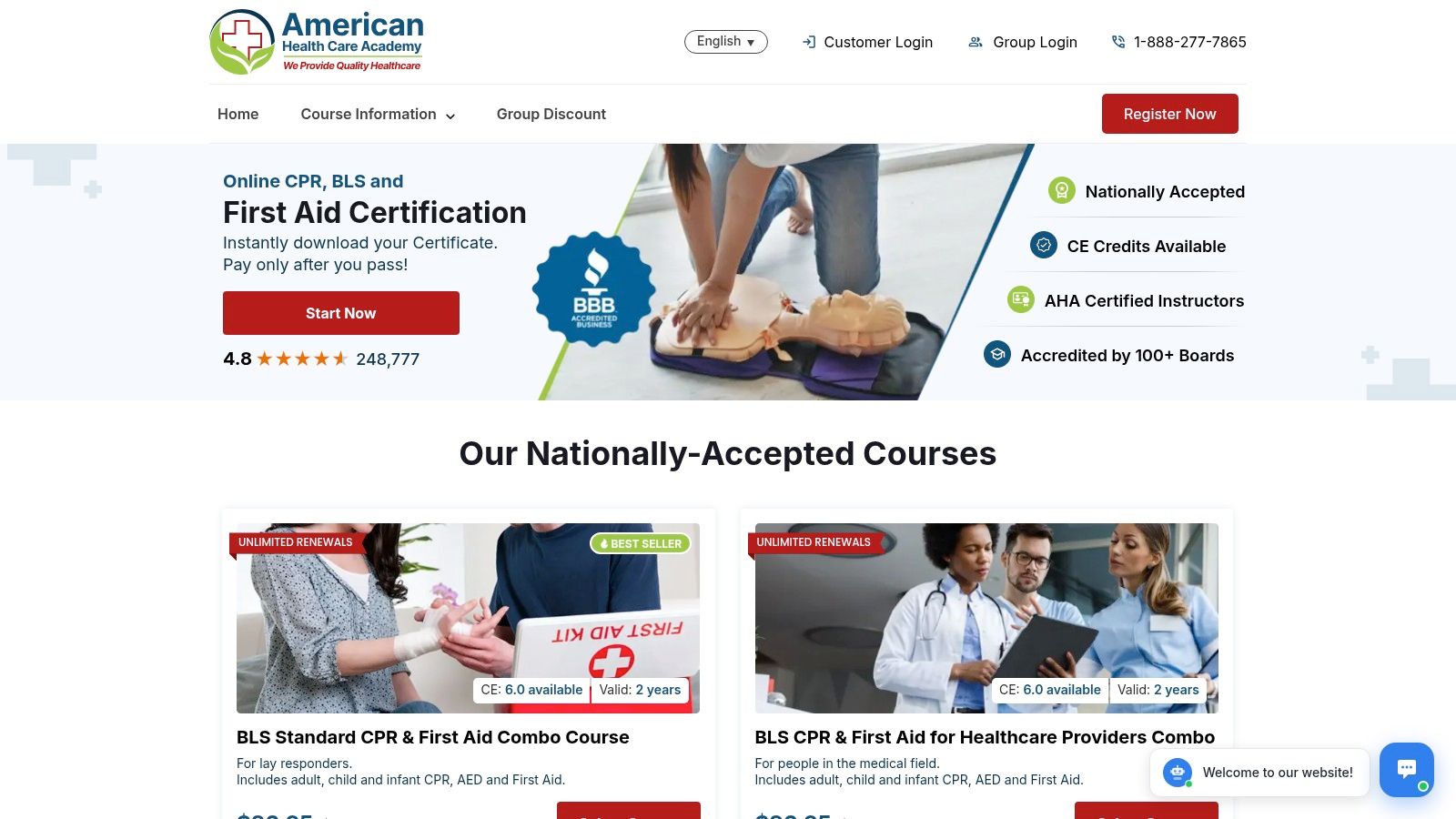
American Health Care Academy casts a wide net, with lay-responder CPR and AED, CPR plus first aid, and healthcare-oriented BLS and advanced courses in one self-paced catalog. The American Health Care Academy course site lists CPR/AED at $14.95 and CPR plus first aid at $36.95. Its materials distinguish an online-only card from a blended card issued after hands-on assessment, and describe a pathway using a manikin with live instructor assessment for learners who need it.
That distinction is the whole decision. If you're a home care worker whose agency requires documented skills, the low online price isn't your real price. Confirm the current hands-on cost at checkout, because advertised prices may be promotional. Care workers planning their training pathway may also find our overview of care assistant training options useful when mapping CPR alongside broader qualifications.
For a family member who wants structured CPR and first aid knowledge at home, the combined online course is reasonably priced and easy to fit around caregiving. For clinical employment, acceptance depends entirely on the employer, program or regulator, and many healthcare settings require a named provider. Ask first, in writing, and keep the reply with your certificate. I'd treat this provider as a budget learning option with an upgrade path, not as an automatic answer to a workplace requirement.
10. American Heart Association - CPR Anytime Kits
This last entry is deliberately not a certification, and including it may save you from a costly misunderstanding. CPR Anytime is a self-facilitated home learning kit combining streaming instruction with a practice manikin. The AHA states explicitly that the kits do not provide a course completion card. The Adult and Child kit and the Infant kit are each listed at $45 on the AHA kit page.
So why buy one? Because readiness at home is a real goal, separate from paperwork. The American Heart Association's 2024 survey report found that in 2023, 35% of 1,268 U.S. adults surveyed said they felt confident performing CPR when needed. For the rest of us, physically rehearsing compressions on a manikin in the living room, with family members taking turns, builds the kind of familiarity a video alone can't. Kits can be reused for refreshers and shared practice, and content may cover CPR, choking relief and AED awareness depending on the kit.
For families: A practice kit builds real readiness at home. It just doesn't produce a card anyone can file at work.
Buy CPR Anytime for household preparedness, grandparents, new parents and family caregivers who want hands-on rehearsal without an exam. Don't buy it to satisfy an employer, school or licensing body. It is not instructor-led, includes no formal skills assessment and requires purchasing and shipping a physical kit.
Online CPR Certification Options at a Glance
| Item | Skills verification | Listed online price | Best for |
|---|---|---|---|
| ProMed Certifications | Not specified in the listing | Not listed | Healthcare professionals seeking online certifications and continuing education |
| American Heart Association, Heartsaver blended learning | Required instructor or approved skills-station session | $19.50; skills session priced separately | Learners who need an AHA card and verified practical skills |
| American Red Cross, CPR/AED blended learning | Instructor-led skills assessment required for workplace certification | Varies by course, format, and location | Learners seeking recognized training with flexible formats |
| National Safety Council, CPR and AED blended training | Hands-on skills portion required for a certification card | $29.95; $23.95 for members; assessment costs extra | Organizations and individuals seeking CPR/AED training without first aid |
| Emergency University, Hands-On Xpress | Live, one-to-one virtual instructor assessment included | $79.95 | Learners wanting instructor-verified skills without traveling to a classroom |
| HSI, online courses and skills verification | Training-center or remote verification available for eligible courses | $24.95 for Adult CPR/AED; $29.95 for BLS | Learners seeking self-paced courses with options for skills verification |
| ProTrainings, online CPR with optional live skills evaluation | Optional live video assessment with a mailed manikin kit | $39.95 for general CPR; $59.95 for BLS; kit listed at $74.95 | Learners wanting flexible online study and an optional remote skills assessment |
| American Academy of CPR & First Aid, online or blended courses | Live skills assessment available as a blended option | $14.99 online adult CPR; $99.99 estimated blended total | Budget-conscious learners who may also need a hands-on option |
| American Health Care Academy, CPR/AED and BLS courses | Optional hands-on assessment pathway for some courses | $14.95 for CPR/AED; $36.95 for CPR plus first aid | Learners seeking low-cost online courses with healthcare course options |
| American Heart Association, CPR Anytime kits | Self-practice with a manikin; no instructor assessment or completion card | $45 per Adult & Child or Infant kit | Families and community learners practicing basic CPR at home |
Pick the CPR Card Your Organization Will Actually Accept
There's no single winner here, and that's good news. You can match the course to the actual requirement in front of you instead of overpaying for features you'll never present to anyone. One question drives the whole decision: does your organization accept an online-only completion card, or does it want a card backed by a verified skills check? Work through this checklist in order before you pay for anything.
Your pre-enrollment verification checklist
- Ask in writing: Email your employer, program, licensing body or regulator and ask which provider, card type and format they require
- Settle the skills question: Confirm whether online-only completion is acceptable or a skills check, in person or live remote, is mandatory
- Match the exact title: Check the course title and card type on the provider listing, not just the marketing name of the course
- Total the complete cost: Add separate skills sessions, manikin kits and fees, and ask whether listed prices are promotional
- Check verifiability: Confirm how an employer can validate your certificate, such as by ID or QR code where offered
Once you're certified, note the issue date straight away. Guidance collected in the Red Cross guidelines database entry on blended learning describes blended learning as combining self-directed knowledge acquisition with manikin practice and feedback, aiming to improve skill performance and retention more than a video-only format. The California Red Cross CPR guidance states that certification from an in-person or blended course lasts two years, while skills can begin to decline within months of training. Set a renewal reminder well before expiry, and book a short hands-on refresher in between if you rarely practice.
After the card arrives, file it properly: keep a digital and printed copy with your other care or employment documents so it's ready for onboarding and handovers. Then reconfirm at renewal. Requirements change, and repeating the same course on autopilot is how people end up holding a card their organization stopped accepting.
Be clear about what online learning can't do. It can't assess your compression depth, compression rate or hands-on AED handling. Those need practice on a manikin with feedback from a qualified instructor, in a classroom or through a supervised remote session. Two options sit outside certification entirely, and both still have real value. Home practice kits build confidence through self-guided work with a manikin, and online-only catalogs are useful for refreshing knowledge with family members. Neither produces a card an employer can accept, so treat them as practice tools rather than proof.
If you coordinate care at home, keep certificates and renewal dates alongside prescriptions, appointment details and handover notes so anyone in the care circle can find them quickly. A shared space such as Tribulys handles that kind of document organization well, though it doesn't verify or issue certifications itself. Confirm the requirement first, then choose the course. That one email up front is the cheapest step in this whole process.
Ready to get your caregiving paperwork in order? Create a tribe at tribulys.fr to store CPR certificates, renewal dates, appointments, medication records and care notes in one private shared space, so your whole care circle stays coordinated and nothing important gets lost before a shift, an onboarding meeting or a handover.