
At 3 a.m., there is an alarm in the house. The elderly person you are accompanying may still be sleeping, the phone is far away, and the first reflex often consists of looking for the button that will finally silence the noise. Stopping an alarm that sounds does not start by turning off the sound. It starts by identifying what alerts and checking if someone is actually in danger.
The rule is simple: look, listen, feel without putting yourself in danger, then decide. Visible smoke, a burning smell, a person who does not respond or an official alert do not call the same gesture as a weak pile beep or a forgotten wake-up. In France, DAAF has been mandatory in housing since the entry into force of the law on 8 March 2015, after Act No. 2010-238 of 9 March 2010 (official text on Legislation). The audible signal must therefore be treated as a safety element, not as a mere nuisance.
Contents
- Before pressing silence checks that save
- Identify the type of alarm and the right gesture of immediate shutdown
- Stop a smoke or CO detector without endangering you
- Silence a car or medical home phone alarm
- Why your alarm sounds for no reason and how to avoid it
- The right reflexes to keep and how to better organize yourself
Before pressing silence checks that save
At night, the noise makes you want to act quickly. A caretaker arrives in a room, lights up the light, searches for the ceiling detector and is already reaching the button. It is precisely at this moment that you have to slow down a few seconds. Observe the room from the entrance, spot a smoke, an unusual glow or a person in difficulty, then ask aloud if everything is okay.
If there is smoke, heat, burning smell or serious doubt, Don't try to shut the aircraft down until the occupants are safe.. Exit, close the doors if you can do it without exposing yourself and call the rescue from a safe place. The Ministry of Ecological Transition indicates that in France a fire is declared every two minutes, that the number of fires has doubled in twenty years and that 80% of victims die intoxicated by smoke (official reminder of fire risks).
Sorting in seconds
When nothing seems to burn, identify the exact source. Is the sound coming from the ceiling, a power station, a telephone, a watch, a car parked in front of the house or from the phone of the person accompanied? An isolated and regular beep does not treat itself as a continuous siren, but rhythm is never enough to rule out a problem.
For a vulnerable person, immediately add a human check: normal breathing, consistent response, absence of fall or malaise. A telehelp alarm can be triggered by accidental pressure, but it can also signal a situation that the occupant cannot explain. lifting of doubts at home helps structure this check before multiplying calls.
Field rule: We don't shut down an unknown alarm. We identify its source, we check the situation, then we use the intended command.
If you are alone, do not climb on an unstable chair and do not cross a smoky room to reach a button. A noisy alarm can wait for a few moments. Smoke exposure or a fall, no.
Identify the type of alarm and the right gesture of immediate shutdown
The first error is to apply the gesture from one device to another. A phone is silent on the screen, a DAAF by its dedicated button, a central by a code, while an official alert must not be neutralized before reading the instructions.
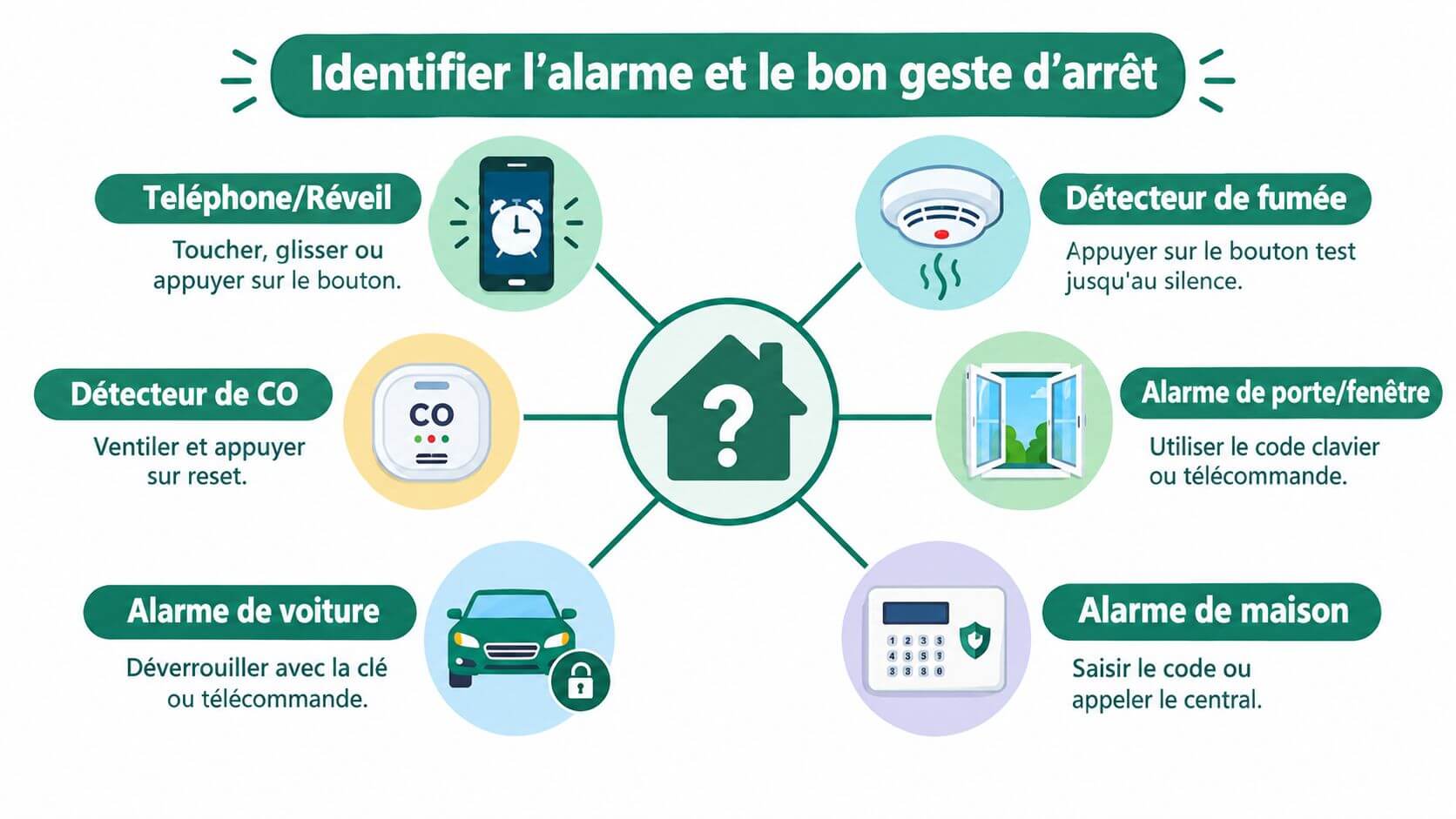
The mind map to remember
- Phone or alarm: Look at the screen. Touch "stop", drag the cursor or press the alarm stop button. Then check that this is a programmed alarm and not an emergency notification.
- Smoke detector: before handling, search for smoke, heat and burning odour. If the room is safe, hold the "Test/Silence" or "hush" button for 5 to 10 seconds, according to the recommended sequence for models sold in France (procedure for silence of a detector).
- Carbon monoxide detector: don't just press reset. Aerate if you can do it safely, get the occupants out and treat the signal as a real alert until checked.
- Door alarm, window or house: Use the keyboard, badge or remote control provided. Do not remove the siren and do not disconnect the power station, as this action can remove the protection and complicate the intervention of the provider.
- Car alarm: Unlock with the remote control or associated key. If the noise returns, move away from the traffic and have the vehicle checked instead of removing a fuse in the emergency.
- Population alert: FR-Alert displays a notification and emits a specific sound signal, including when the phone is in silent mode. SAIP sirens also follow a code with start, end of alert and instructions. Check the official notification and instructions before attempting to cut the sound, as recalled by Ministry of the Interior about FR-Alert.
The fall detector belongs to another logic. It may not produce any local sound or transmit an alert to a platform. The person may need a simple question, asked calmly: "Have you fallen? Can you stand up? Are you hurting? " For the operation of a emergency call button, the technical stop never replaces the verification of the person's condition.
Stop a smoke or CO detector without endangering you
A DAAF that sounds imposes a precise sequence. The silence button is used to temporarily interrupt an alarm after verification, not to turn a suspicious device into decoration. If the alarm returns, it is that the cause persists or the detector has a defect.
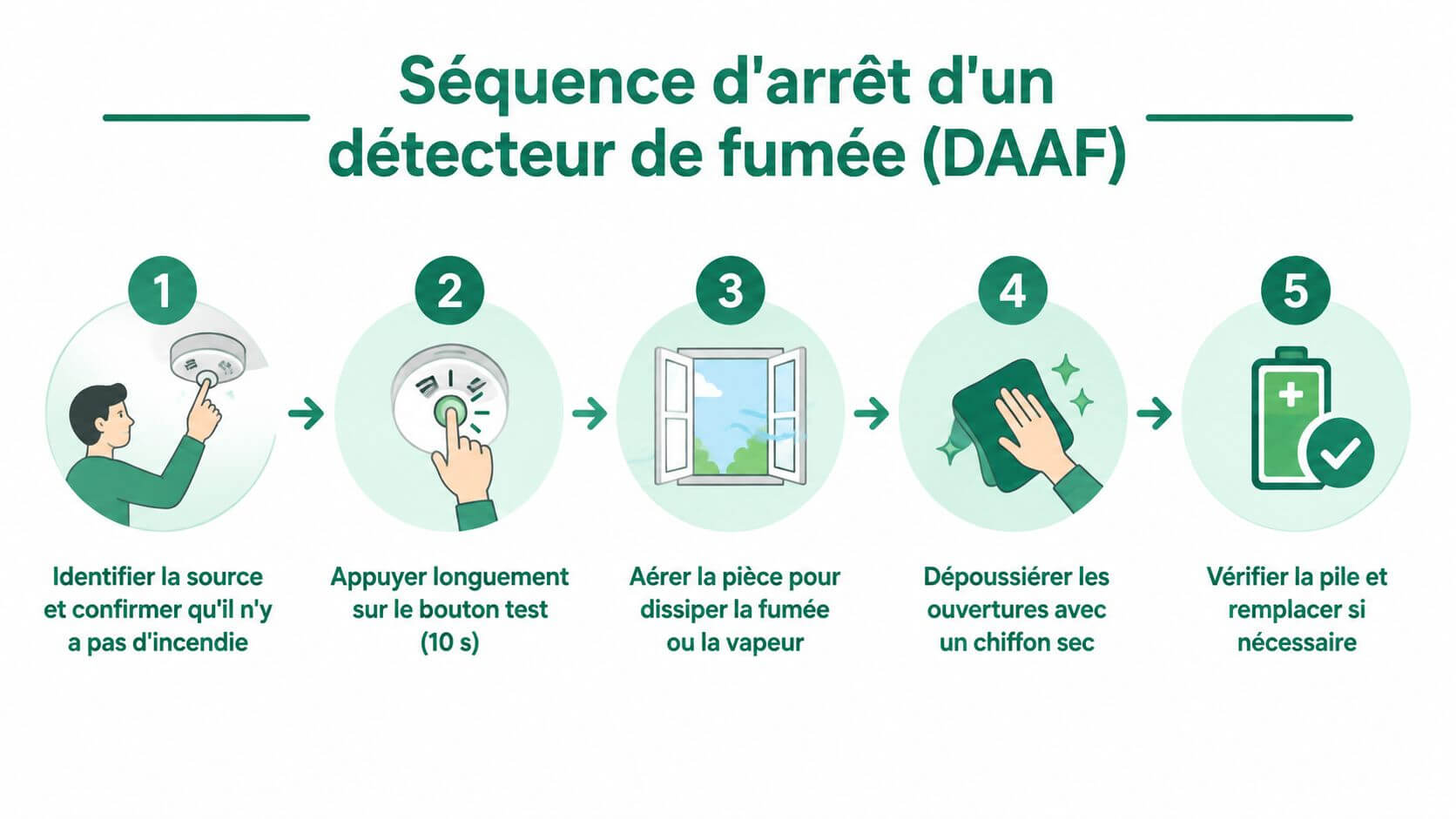
The safe sequence
- Check the room without exposing you. Search for smoke, heat, burning smell or unusual source. Also check the kitchen, hallway and nearby rooms.
- Evacuate in case of doubt. If you see smoke or the air becomes irrespirable, do not stay to diagnose the device.
- Use Test/Silence. If no fire is clear, hold the button for 5 to 10 seconds (Operational recommendation).
- Aerate the source of steam or light smoke. A cooking, a hot shower or a punctual release can trigger the sensor. Remove the cause, then let the air renew.
- Wait for the rearmament. On some models, the silence mode suspends the alarm about 15 minutes before automatic rearmament if danger persists (operation of the silence mode).
Do not immediately remove the batteries. This method sometimes stops the noise, but it leaves the housing without active detection. The technical recommendations favour the elimination of the cause, the test of the device, then the replacement if the beep continues despite the reset (troubleshooting a beeping detector).
Carbon monoxide
The CO is not visible to the eye and its lack of odour does not make the alert less serious. If a CO detector sounds, get the occupants out, aerate only if it does not expose you, then ask for a check of the installation concerned. A person who has an unwellness, unusual weakness or disorders of vigilance must be dealt with quickly.
After an apparent false alarm, dust the openings with a dry cloth, check the battery and test the device. If the signal persists, replace the detector rather than neutralize it permanently.
Here is a visual demonstration of the order and the precautions to be followed:
Silence a car or medical home phone alarm
Daily alarms do not all have the same level of risk. A wake-up can be stopped immediately. An alarm centre requires authentication. A remote assistance often requires talking to the operator before concluding that this is a false alarm.
| Type of alarm | Immediate stop gesture | Pre-stop check | When to Climb |
|---|---|---|---|
| Phone or alarm clock | Press "stop" or drag the cursor | Control the time and application that triggered the sound | If the phone displays a security alert or an unknown message |
| Home alarm | Enter code, present badge or use remote control | Check a door, a window and the presence of an occupant | If the code fails, if the intrusion is possible or if the power station calls an operator |
| Car alarm | Unlock with key or remote control | Check the environment and visible condition of the vehicle | If the alarm repeats or the vehicle interferes with safety |
| Teleassistance | Answer to the platform's intercom or phone | Ask the person what happened and check his condition | In case of fall, pain, confusion, lack of response or doubt |
| Emergency button | Responding to incoming call and explaining the situation | Confirm that the person is aware and safe | If the signal comes from an isolated relative or if the situation remains uncertain |
The special case of tele-assistance
In an elderly person, sound shutdown is often only the first step. Accidental pressure can cause a call, but the operator must be able to establish the situation before closing the alert. Tele-handling provides for a lifting of doubt and can arrange an intervention at any time before preventing rescue, depending on the context (Official provisions on tele-assistance).
If the person does not respond, do not call several relatives at random. Send a specific relay to someone who can enter the accommodation, while calling emergency services if a danger is plausible. emergency call button must be accompanied by a clear instructions, with easily accessible contacts and address.
For a home alarm, also note the time, the area indicated by the power station and the actions taken. This trace prevents a next responder from repeating the same checks without knowing what happened.
Why your alarm sounds for no reason and how to avoid it
A so-called "untimely" alarm often has a concrete cause. In a DAAF, cooking steam, dust, insects, a weak battery or a cracked sensor can disrupt the operation. The aim is not to make the device quiet at any cost, but to remove the cause without deactivating monitoring.
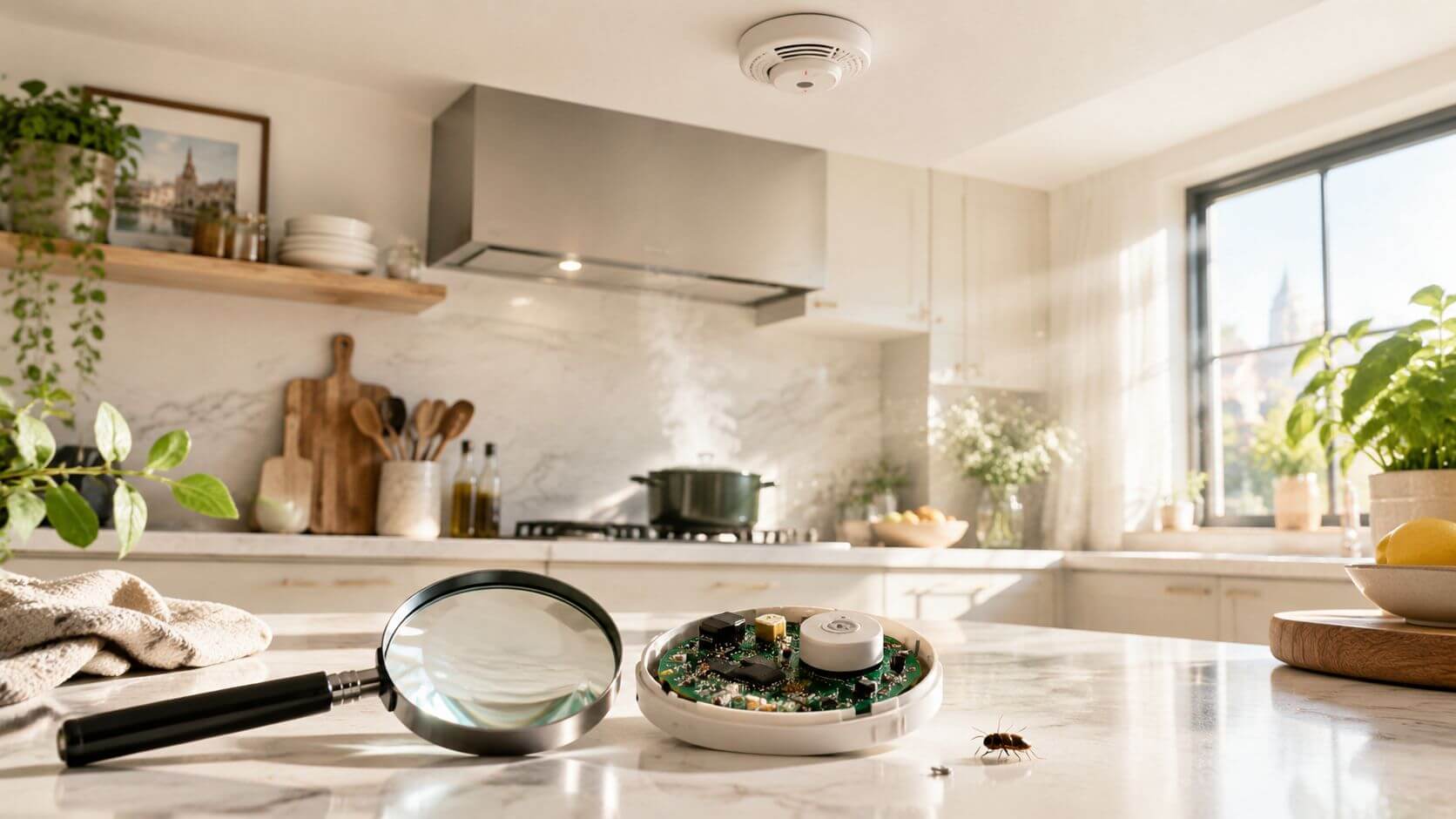
Read the symptom rather than get the noise
A trigger during cooking directed towards steam or cooking particles. An irregular beep that returns to rest makes more think of a weak diet, dust or a defect. A device installed too close to a steam source or in an air current can also react repeatedly.
Start with simple gestures:
- Dry clean. Use a dry cloth or tool suitable for openings. Do not wet the detector.
- Look for the insects. A small insect in the detection chamber can cause repeated triggers.
- Check the battery. Replace it if the device reports a weakness, then test the operation.
- Control the location. Avoid areas directly exposed to cooking or bathroom steam.
- Replace the failed device. If the beep persists after cleaning, new battery and reset, the internal defect becomes probable.
An external alarm system siren is itself framed by a maximum duration and sound level. This does not exempt the search for the cause, but it explains why the correct troubleshooting goes through the power plant, code or installer rather than through a wild cut.
In the case of an elderly person, prevention must remain visible and understandable. Place a statement near the phone, record the code in a secure location for caregivers and explain the difference between a maintenance beep and a continuous alarm. To choose the location and arrange the checks, see this guide on the installation of an alarm itself.
The right reflexes to keep and how to better organize yourself
A well-managed alarm is based on a short routine, known to the whole family. Keep close to each device its manual, model name, stop gesture and number to call in case of doubt.
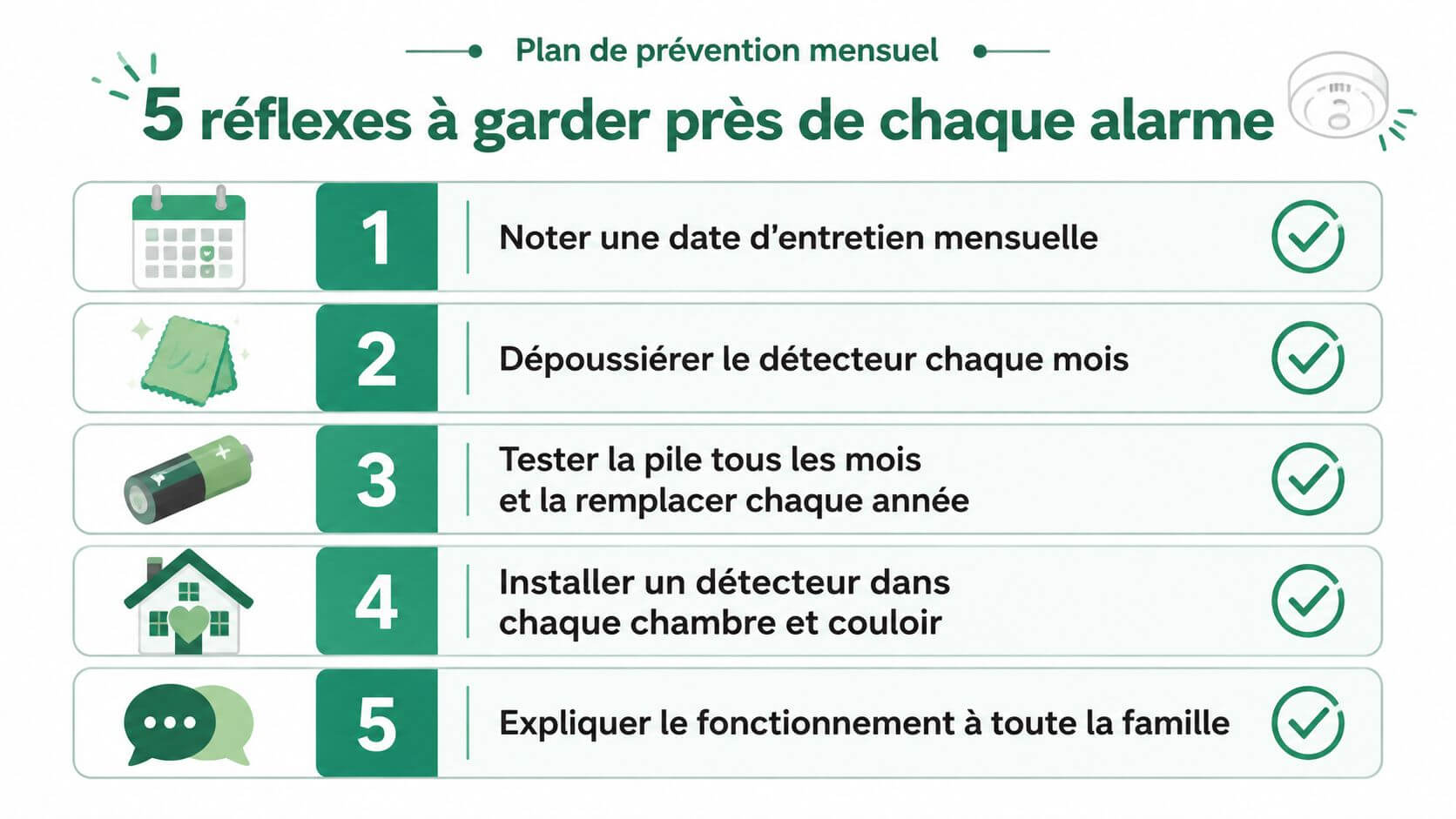
Helper's checklist
- Identify before cutting. Locate the source and distinguish DAAF, central, tele-assistance, telephone or official alert.
- Check the people. An alarm in a room requires you to check the condition of the occupant, not just the device.
- Treat danger before nuisance. Smoke, heat, burning odour, malaise or lack of response warrant safety.
- Use the prescribed command. Silence button, code, badge, remote control or operator response, depending on the equipment.
- Trace what happened. Note the time, probable cause, action and follow-up to be given.
Plan a monthly interview: dry dust removal, visual inspection, button testing and check the accessibility of the instructions. For a shared home between families, home care workers and caregivers, an off-line emergency log and a common logbook avoid duplicate calls. Tribulys allows for the centralization of timed transmissions, assigned tasks, and an emergency card, which can be consulted by authorized persons, so that everyone knows who checked the alert and what action remains to be taken.
With Tribulys, group the alarm instructions, emergency contacts and home-related transmissions in a space shared with your Tribe of Caregivers. Create today an emergency card and a verification task so that the next alarm triggers a coordinated response, not a call race.
Put this organisation into practice with Tribulys
Keep your care journal, shared calendar, tasks, medication tracking and emergency information together. Start for free and invite the relatives and professionals involved in your loved one’s care.