
A loved one starts an amoxicillin cure for an infection, then complains of fever or pain. You find ibuprofen in the pharmacy cabinet and you wonder if he can take it at the same time, if it is necessary to space the intakes or if it is better to choose paracetamol. This hesitation is legitimate, especially when several people participate in home care.
The association amoxicillin and ibuprofen asks to distinguish between two subjects. The first step is to check if ibuprofen is appropriate during infection, and then to arrange for and monitor unusual signs. Rules also differ according to age, pregnancy, kidney condition and other treatments.
Contents
- Introduction to the risk of association
- Understanding amoxicillin and ibuprofen
- Possible pharmacological interactions
- Practical cases by population
- Warning signs and complications
- Practical tips for caregivers
- Follow-up and documentation with Tribulys
- Conclusion and key points
Introduction to the risk of association
Martine helps his father follow a prescription for amoxicillin. In the morning, he still has a sore throat and fever. Before giving her an ibuprofen tablet, she consults the prescription, looks at the medications already taken and calls the pharmacist. This approach avoids reducing the question to a simple "can we swallow the two tablets together? "
Amoxicillin works on some bacteria, while ibuprofen mainly targets pain, fever and inflammation. Therefore, the main problem is not only a direct interaction between molecules. An infection may also develop unfavorably under anti-inflammatory drugs, and digestive or renal side effects should be taken into account.
The French recommendations call for caution with ibuprofen during an infection. The follow-up allows you to understand the role of each medication, the precautions taken, the special situations and how a caregiver can document the information without leaving an application to decide instead of a healthcare professional.
Understanding amoxicillin and ibuprofen
I-I-Iamoxicillin It is an antibiotic. It is not used to treat a cold or viral infection, but certain bacterial infections when prescribed by a health care professional. To retain its role, it can be compared to a detective who is looking for a specific bacterial target. It does not directly remove pain, feeling of curvature or fever.
In France, amoxicillin remains one of the most widely used antibiotics despite the 30% decrease in cities between 2000 and 2020, according to the consumption data reported in the French Observatory for the Use of Antibiotics. This important place explains why families often encounter questions about taking it and its association with common medications.
I-I-Iibuprofen belongs to nonsteroidal anti-inflammatory drugs, or NSAIDs. It acts as a fire extinguisher on certain mechanisms of pain, fever and inflammation. It can therefore relieve a symptom, but it does not replace the treatment of the bacterial cause when an antibiotic is needed.
Two different needs
| Medicinal product | Main role | What you shouldn't ask him |
|---|---|---|
| Amoxicillin | Treating certain bacterial infections | Immediately relieve any pain or fever |
| Ibuprofen | Reduce pain, fever and inflammation | Treating the infection itself |
This distinction is useful to avoid a frequent error. Persistent pain does not automatically mean that pain must be increased. It can justify a new medical opinion, especially if the general condition deteriorates or if infectious symptoms intensify.
For further information on possible side effects of antibiotics, please refer to this guide on side effects of antibiotics and amoxicillin. The pharmacist will also be able to check other medications, known allergies and history that change the benefit-risk balance.
Possible pharmacological interactions
Can the question "Amoxicillin and ibuprofen be taken together? " is not a universal answer. The professional checks prescription, associated treatments, health status and infectious context. Simultaneous dosing may also complicate the identification of the cause of an adverse reaction.
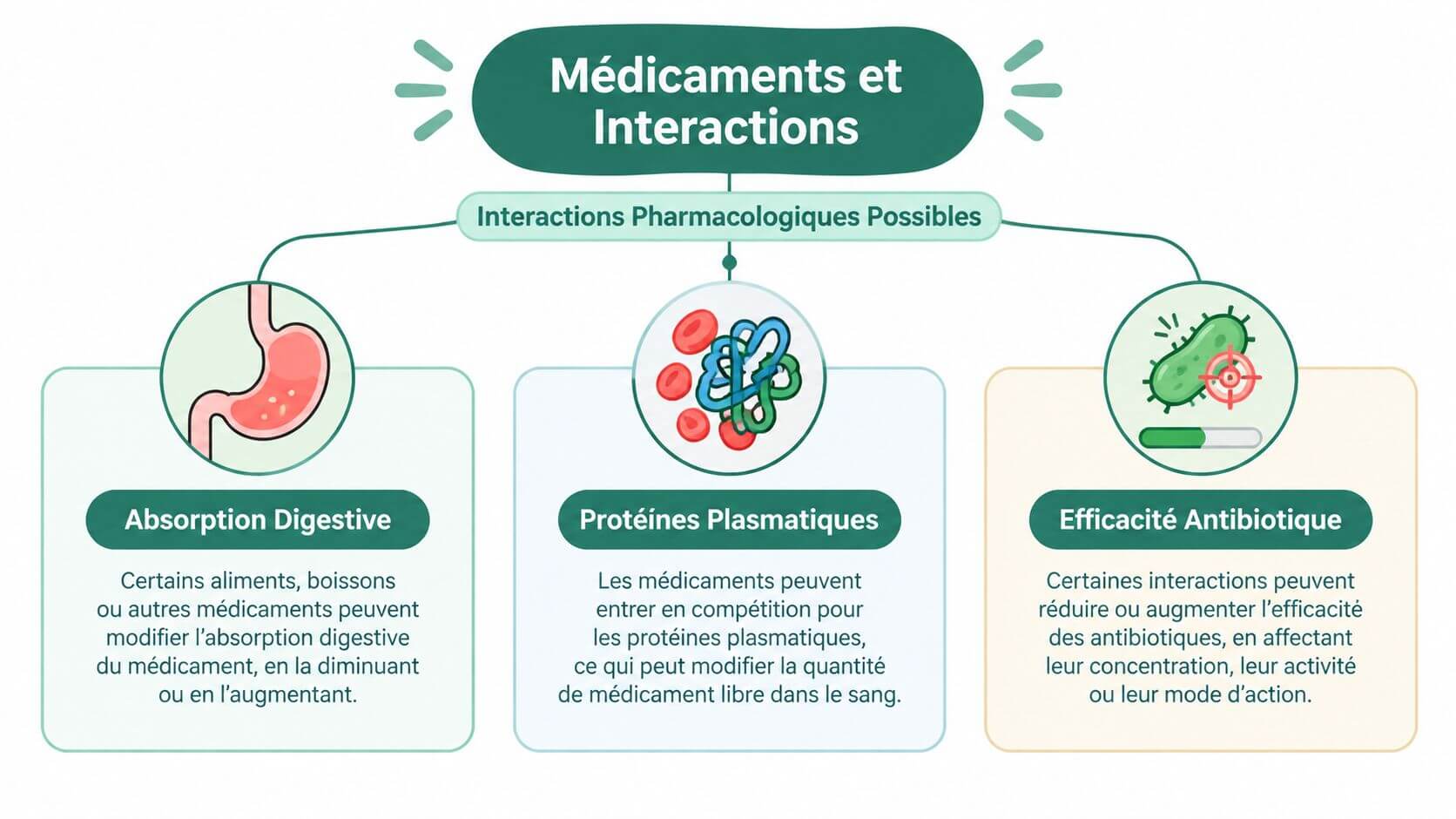
Digestive absorption
The first area to be monitored is the digestive tract. When several oral treatments are swallowed together, their passage and absorption may be influenced by stomach content or other medications. The VIDAL base recommends respecting at least two hours between amoxicillin and other oral therapy in order to limit absorption interactions, as indicated in its data sheet amoxicillin and its administration.
This rule does not make it possible to decide the dose or frequency alone. Rather, it serves as an organizational benchmark to be confirmed with the pharmacist, especially if the prescription contains several products.
Plasma proteins
Some drugs circulate in the blood partly bound to plasma proteins. Competition at this level may alter the available fraction of a drug, but its importance depends on the molecule, the dose and the whole treatment. Therefore, it would be imprudent to conclude, without verification, that ibuprofen always changes the action of amoxicillin.
Efficacy and the Infectious Context
Ibuprofen does not necessarily block antibiotic action. On the other hand, the French authorities do not recommend self-medication by NSAIDs when an infection is present, as these medicines may mask certain symptoms or contribute to worsening in certain situations. The stake is clinical, not just pharmacological.
In order to better organize the information transmitted between relatives and professionals, the therapeutic monitoring of medicinal products can help keep schedules and observations. It never replaces the validation of a doctor or pharmacist.
Practical cases by population
The same combination is not the same for a child, an elderly person, a pregnant woman or a patient whose kidneys work less well. Age and history influence the tolerance, formulation and relevance of ibuprofen.
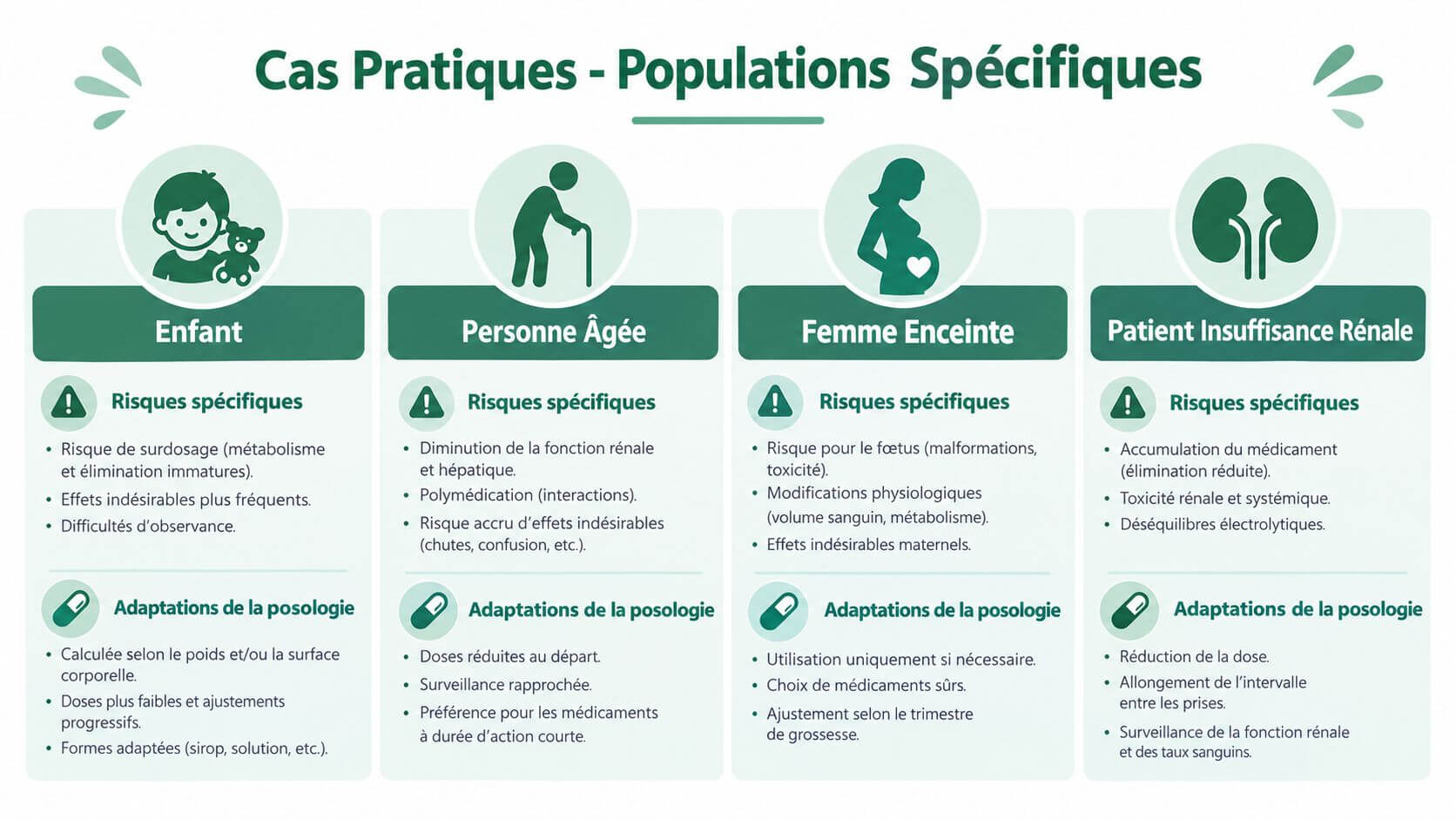
Four situations not to be treated in the same way
Child. The parent must not transpose an adult dose. It checks the presentation, the weight taken into account by the prescriber and the syringe or device provided. A fever or pain that persists deserves an exchange with the doctor, rather than an improvised repetition of ibuprofen.
Old person. An elderly person often takes several medications and may drink less when an infection occurs. The caregiver prepares the complete list, including non-prescription products, and then asks the pharmacist if the NSAID is suitable.
Pregnant woman. Pregnancy changes medication precautions. ibuprofen should not be added on its own initiative. The person contacts the midwife, doctor or pharmacist before taking the medication.
Renal failure patient. Renal function must be part of the decision. The caregiver does not alter the antibiotic or analgic and reports the kidney history to the prescriber, especially if the general condition deteriorates.
In the Lower Rhine, 20% of antibiotic prescriptions in 2019 associated an NSAID with an antibiotic, according to the elements relayed by theANSM in its recommendations on ibuprofen and ketoprofen. The frequency of this practice reinforces the value of individualized verification.
Warning signs and complications
A useful monitoring begins with the general condition, not just the clock of the shots. A helper notes the evolution of the symptoms, the appearance of a new reaction and the ability of the person to drink, eat and breathe normally.
ANSM reported 162 serious ibuprofen-related cases between 2019 and June 2023, which justifies special vigilance during infections, as recalled in this presentation of the French recommendations on ENT infections and ibuprofen.
Symptoms that require rapid notice
Allergic reaction. Swelling of the face or throat, respiratory discomfort, malaise or extended rash require an immediate call to the emergency. The caregiver does not give an additional dose to "wait until you see".
Gastrointestinal bleeding is possible. Bloody Vomiting, black stools or intense abdominal pain should be reported without delay. ibuprofen may irritate the digestive tract, while amoxicillin may also cause digestive disorders.
Degradation of infection. Persistent fever, increasing pain, unusual drowsiness or respiratory discomfort warrant rapid medical contact. Antalgics can reduce the symptom without regulating the course of the infection.
Renal injury possible. An unusual decrease in urine, oedema or major weakness should lead to prompt medical advice, especially in a person already with kidney disease.
It's a major diarrhea. Severe, persistent or blood-borne diarrhoea should not be trivialised during antibiotic therapy. The prescriber should decide what to do.
Do not stop an antibiotic prescription on your own initiative, unless an emergency professional tells you. In case of severe symptoms, call the emergency room, then prepare the names, schedules and last taken to facilitate the assessment.
Practical tips for caregivers
The safety is based primarily on complete information. The caregiver collects the prescription, medications purchased without a prescription, supplements and patient's reported history. He then asks the professional if ibuprofen is appropriate, instead of deducing the response from the mere presence of amoxicillin.
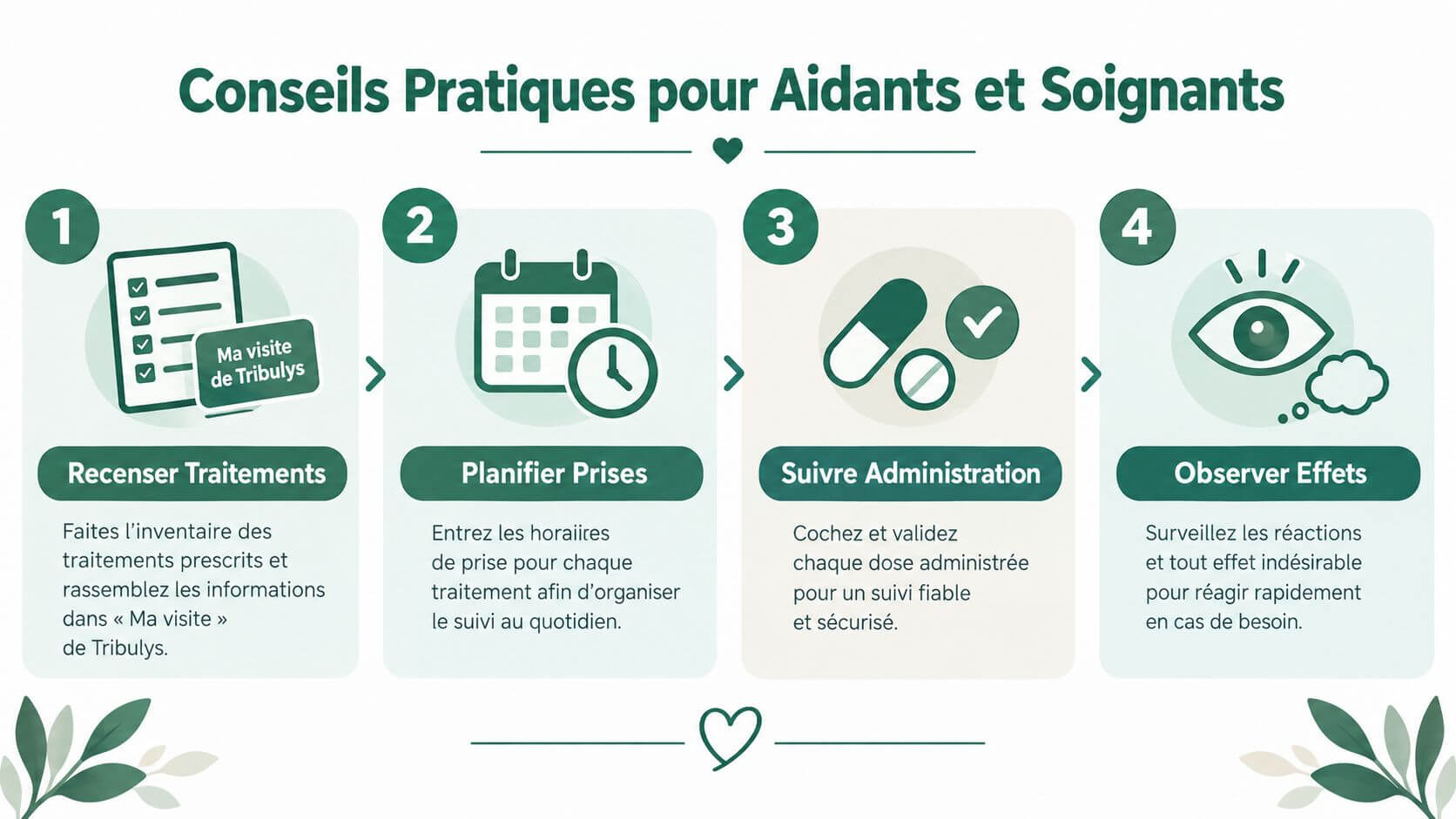
A simple method at home
Identify the treatments. Write down the name of each drug, its prescribed dosage, timing and reason for use. Mention ibuprofen explicitly, even if purchased without a prescription.
Plan schedules. Use a paper chart, shared calendar, or follow-up tool. If multiple oral treatments are involved, ask the pharmacist how to apply the recommended two-hour interval to limit absorption problems.
Validate each administration. The person who gives the medication immediately ticks the dose and notes a refusal, vomiting or an oblivion. A precise trace avoids the double taken during the relay between caregivers.
Observe the reactions. Note the time of onset of abdominal pain, rash, diarrhoea, oedema or decreased urine. The chronology helps the professional to analyze the situation.
Transmission reflex: Dated and factual observation is more useful than a message like "the drug goes wrong."
Nearly 20% of French take ibuprofen more than once a month, according to the OpinionWay/OFMA survey relayed by the Observatoire français des medicaments analgiques. This habit of use makes it particularly important to identify the catches already taken before adding a pain product.
Tribulys can centralize the information of a relative, with a shared notebook, the follow-up of drugs and transmissions between caregivers and providers. does not detect interactions, never automatically suspend a recall for this reason and does not clarify a cross dose. Medical advice remains essential. To structure the relay at home, also consult this resource on theapplication for family carers.
Follow-up and documentation with Tribulys
In the Drug Book of Tribulys, the caregiver can create an amoxicillin sheet and another for ibuprofen, enter the prescribed schedules, confirm each dose and add a timed comment. The shared history gives the doctor or pharmacist a more reliable timeline than an approximate memory.
Space My Visit serves to prepare an appointment. It is not a drug verification protocol. The right reflex is to list the current treatments and prepare the question to be asked directly to the professional.

The courier can send an observation or a question to the professional, but it does not validate an association or a dose. To reflect more broadly on the organized flow of answers and information, Optimizing the customer relationship through AI presents the challenges of a structured knowledge base, without replacing clinical expertise.
One digital transmission notebook can complete this follow-up by keeping the elements useful for the next relay. Note above all what was taken, at what time, with what symptoms and what professional instructions.
Conclusion and key points
The association amoxicillin and ibuprofen must not be managed automatically. First check if ibuprofen is suitable during infection, consider age, pregnancy and renal function, and then ask the pharmacist or doctor for advice. Respect catch organization, monitor alert signs and document each administration. Tribulys can centralize treatments and observations, but the application does not detect interactions and does not suspend recalls for this reason.
Tribulys helps caregivers to share schedules, confirm intakes, and transmit dated observations around a loved one at home. To prepare more serenely a question about amoxicillin and ibuprofen, discover Tribulys and centralize the information to be presented to the healthcare professional.
Put this organisation into practice with Tribulys
Keep your care journal, shared calendar, tasks, medication tracking and emergency information together. Start for free and invite the relatives and professionals involved in your loved one’s care.