
In men who consume more than 80 g of alcohol per dayA study of Lyon employees found that there was an increase in the number of 24.7% of triglycerides in relation to non-drinkers, as well as an increase in 10.0% of total cholesterol (Lyon study published in PubMed). This result recalls a often minimized reality: alcohol not only acts on the liver or tension. It can also quickly change the transport of fat in the blood.
The link between alcohol and triglycerides However, it is not the same for everyone. The dose counts, but also the time of consumption, the foods present in the plate, the weight, the blood glucose, the state of the liver and the personal metabolic sensitivity. Two people can drink in a comparable way and obtain very different lipid balances.
Understanding the mechanism avoids shortcuts like "wine would be preferable" or "one glass never counts". Instead, the whole situation should be observed and the biological response checked with a health care professional. Home follow-up tools can then help maintain changes over time, without replacing analyses or medical advice.
Contents
- Why alcohol makes triglycerides rise
- The liver mechanism in three steps
- Thresholds and blood thresholds to know
- What the French authorities really recommend
- Beer, wine or spirits
- Acting daily on her life hygiene
- Piloting your home follow-up with Tribulys
- When to view and alert signals
Why alcohol makes triglycerides rise
Triglycerides serve as an energy reserve. After a meal, the body uses some of the nutrients, then turns the excess into stored lipids. The liver orchestrates this sorting by manufacturing and packaging fat in particles called VLDL, which then transport it in the blood.
Ethanol temporarily changes the order of priorities. The liver treats it first, which diverts some metabolic pathways from their usual functioning. This reorientation can promote the accumulation of fat in the liver, then their release as VLDL.
A multi-centre French study conducted with 1,581 men and 1,535 women In three regions there was a positive association between total alcohol consumption and blood triglycerides in both sexes (French multicentre study). Beer was associated with higher triglycerides in both men and women. Wine was mainly associated with a more favourable lipid profile via HDL. After consideration of socio-economic factors, however, the study did not clearly attribute the effect to the type of drink itself.
The role of the field
The context of the meal can amplify the response. The most unfavourable combination occurs when alcohol accompanies a large portion of starch, a sweet dessert or a sweet drink. The liver then receives several sources of energy to treat at the same time. Overweight, hepatic steatosis and insulin resistance can reinforce this orientation towards lipid storage.
To identify what influences you, compare similar situations. Note the type and quantity of alcohol, the content of the meal, the schedule, and then compare these observations with your medical reports. This method helps to distinguish the effect of drinking from that of the meal or the metabolic field.
Central idea: the risk depends on the amount of ethanol, the meal that accompanies it and how your body treats it.
Low or moderate intake does not necessarily cause triglycerides to increase in a visible way in everyone. In the case of hypertriglyceridemia, however, an alcohol-free period, decided with a health care professional, may serve as a practical test. An improvement suggests a reversible part, while persistence indicates that a broader balance and management remains necessary.
The liver mechanism in three steps
The liver looks like a sorting plant. It receives ethanol, treats it as a priority, then tries to maintain in parallel the blood glucose, the production of lipids and the energy supply of other organs. When several flows arrive at the same time, including alcohol and fast sugars, the production chain of triglycerides can be more strained.
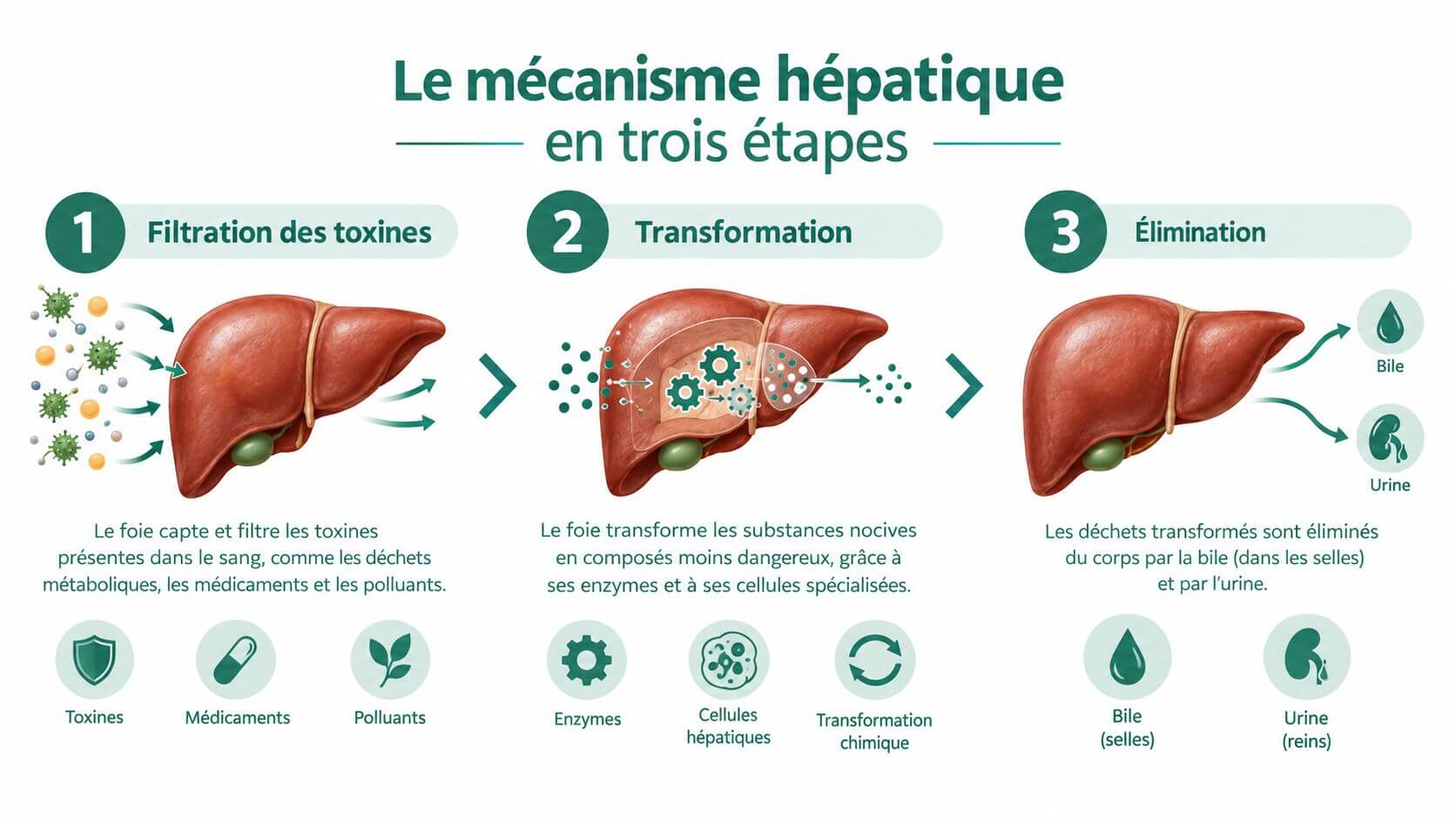
First step, alcohol becomes a priority
Ethanol is first transformed into acetaldehyde and then acetate, thanks in particular to alcohol dehydrogenase and aldehyde dehydrogenase. These reactions alter the balance of NAD+, a molecule necessary for several energy reactions.
This change slows down neoglucogenesis, i.e., the manufacture of glucose by the liver when food intake is not enough. Therefore, the liver does not treat alcohol as an ordinary nutrient that it could simply store in a reserve.
Second step, the surplus feeds lipogenesis
Acetate can be converted to acetyl-CoA. When sufficient energy is available, part of this acetyl-CoA is used to produce new fatty acids. This process, called de novo lipogenesis, transforms a metabolic surplus into lipid feedstock.
The fast sugars consumed at the same time can reinforce this orientation. An evening combining alcohol, sweet drinks, pastries and carbohydrate-rich meals therefore provides several signals that push the liver towards the production of triglycerides.
Third stage, the VLDL transport them
The liver assembles fatty acids with glycerol and exports them mainly in VLDL particles. These particles release triglycerides into the bloodstream. Variation may occur after recent consumption, but its importance depends on the terrain and the repetition of episodes.
The mechanism concerns ethanol itself, whether it comes from beer, wine or spirits. The differences between drinks then come from their overall composition, their actual dose and what is added to it, not from alcohol that would be metabolically protective by nature.
Thresholds and blood thresholds to know
A rate of triglycerides is read with the context of sampling, including fasting, treatments and other lipid balance parameters. In practice, a value less than 1.5 g/L Generally corresponds to the usual area. Beyond, interpretation depends on trend and terrain, not an isolated number.
Benchmarks distinguish an intermediate area between 1.5 and 2 g/L, moderate hypertriglyceridemia between 2 and 5 g/L, then a severe form from 5 g/L (French landmarks taken over by Kantesti). The higher the result, the more rapid medical advice is required, especially because of the risk of pancreatic complication in very high forms.
Read the balance sheet without mistake
| Triglycerides (g/L) | Interpretation | What the result implies |
|---|---|---|
| Less than 1.5 | Generally expected value | Check other balance sheet factors and result stability |
| From 1.5 to 2 | Alert zone | Place the number in context and control its evolution |
| 2 to 5 | Moderate hypertriglyceridaemia | Organize medical follow-up and search for related factors |
| From 5 | Severe hypertriglyceridaemia | Seek medical advice quickly |
A balance sheet is not a perfect photograph of the metabolism. The time of collection, a recent meal, an intercurrent disease or treatment can alter the result. Comparing several analyses carried out under close conditions helps to distinguish a temporary elevation from a persistent trend.
As a result, the blood concentration does not mechanically deduce an amount of alcohol consumed. The data from the Lyon study cited in the introduction combines a reported consumption of more than 80 g of alcohol per day a measurable increase in triglycerides, without making it a valid boundary for each person.
A personal answer
Sex, weight, family history, liver steatosis, blood glucose, and some treatments change the response. Insulin resistance can make the balance more sensitive, especially if alcohol accompanies a sweet meal. A home-based monitoring tool such as Tribulys helps to record results, schedules, and context, in order to identify an evolution rather than react to a single value.
What the French authorities really recommend
The High Health Authority takes a cautious position in the face of hypertriglyceridemia. Alcohol is one of the food-related factors in the Strongly discourage, andabstinence is recommended in affected patients (French dietary guidelines on hypertriglyceridaemia).
This recommendation does not mean that a glass necessarily causes immediate danger. Rather, it indicates that, when triglycerides are high, a complete shutdown clearly removes a possible factor. Partial reduction leaves more variables at stake if the balance remains abnormal.
The abstinence test
The HAS indicates that a 5-7 days abstinence test may help evaluate alcohol-dependent hypertriglyceridaemia. A net decrease after stopping makes the causal link more plausible, without exempting from looking for other factors, such as sugars, diabetes, overweight or certain medicines.
The test is part of a medical process. If consumption is important, sudden cessation can cause withdrawal symptoms. Asking for advice before changing your habits quickly allows you to choose a safe setting.

The follow-up exceeds the lipid balance. A regular measurement of the tension, explained in this practical guide to measuring voltage, completes the cardiovascular risk assessment, without replacing the blood sample. Note the schedule, the context of the meal and the results helps to link a variation to what has preceded it. Tribulys can support regular home follow-up, rather than an isolated response to a single check-up.
Beer, wine or spirits
Comparing beverages requires distinguishing ethanol from carbohydrates, volume served and the context of the meal. Beer, wine or spirits can provide a close amount of pure alcohol, while producing a different metabolic load.
In practical terms, a beer of 25 cl can bring about 10 g carbohydrates, a glass of wine 12 cl often few carbohydrates, and 4 cl of spirits consumed alone almost none. With a soda, juice or syrup, the same spirits change profile. The exact amount varies depending on the recipe and the drink, but this example helps identify what is added to ethanol.
| Type of alcohol | Pure Ethanol | Carbohydrates | Effect on triglycerides |
|---|---|---|---|
| Wine | 12 g | Variable depending on wine and meal | Effect mainly related to ethanol and context |
| Beer | 13 g | Present in the drink | Ethanol is added to a possible carbohydrate charge |
| Spiritual | 10 g | Low alone, but high with soda or juice | Sweet mixture may increase liver lipid production |
These benchmarks therefore do not refer to a "safe" drink. Red wine should not be presented as a protector of triglycerides, even if its reputation is sometimes based on other discussions about HDL cholesterol. The moment also counts. A drink taken with a meal rich in bread, dessert or starch may weigh differently on the balance sheet than a comparable consumption in a different food context.
The real triptych
The French multicentre study observed a positive association between total alcohol and triglycerides, with differences between drinks, without clearly demonstrating a specific effect of the type of drink after socio-economic adjustments. The metabolic field helps to understand why the response varies from person to person, as explained in this study. French analysis of the relationship between alcohol and lipids.
Before comparing the bottles, ask yourself three questions:
- How much ethanol? The size of the glass and the number of drinks determine the actual exposure.
- When and with what foods? The combination with fast carbohydrates can increase the liver production of triglycerides.
- What metabolic field? Overweight, diabetes, steatosis and insulin resistance can make the response more pronounced. Note these elements in a home follow-up with Tribulys helps to link a variation to its context, rather than judge a drink in isolation.
Acting daily on her life hygiene
Reducing or stopping alcohol is an important lever, but triglycerides respond to the whole way of life. Every day, the liver receives signals related to meals, physical activity, sleep, weight and treatments. Changing a single factor can help, without correcting a permanently disturbed balance.
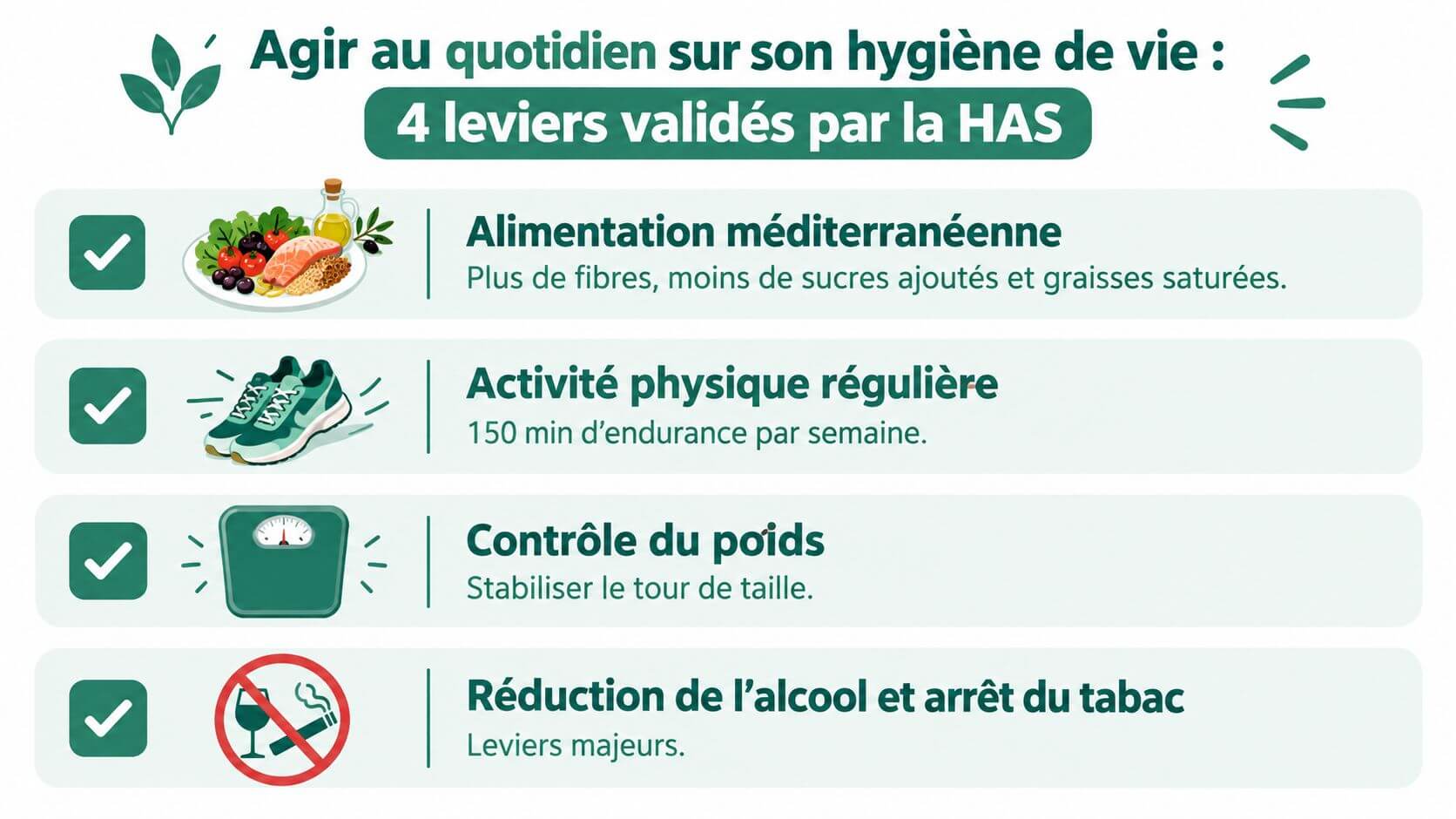
Four levers to combine
The Mediterranean dish Gives more room to vegetables, legumes, fibers, fish and fats of better quality. It limits added sugars, ultra-processed products and saturated fats. For triglycerides, removing sweet drinks, frequent desserts and snacking can count as much as the choice of oil.
Endurance activity helps muscles to use lipids. Has recommended at least 150 minutes per week physical activity of endurance, in accordance with the French dietary recommendations. Active walking, cycling or swimming can be divided into sessions adapted to each individual's starting level and possibilities.
Weight and waist circumference follow each other without judgment. In case of overweight, progressive weight loss can significantly improve lipid metabolism. The objective is defined with the professional who knows your file, taking into account the metabolic context, eating habits and possible treatments.
Alcohol may be reduced or stopped depending on the level of triglycerides, history and individual tolerance. When the rate is very high, complete abstinence offers the largest margin of safety. If stopping seems difficult, medical or addictological support allows you to move forward without remaining alone in the face of symptoms of lack or installed habits.
The timing of consumption also deserves to be observed. A glass associated with a meal rich in sugars or starch does not fit in the same metabolic context as an isolated consumption. Note the time, the content of the meal and the activity helps to identify combinations that precede an increase.
Measure to adjust
A biological control at three months may be used as a benchmark to assess the trend, with an fasting lipid balance and, depending on the context, blood glucose or HbA1c. If alcohol has not been completely stopped, the doctor interprets the result taking into account this persistent exposure.
Therapeutic follow-up includes takings, oblivions and changes in habits. therapeutic monitoring of medicinal products can help keep this information and pass it on to the doctor, so that a decision is not based on an isolated memory.
Practical benchmark: Note for a few days the consumption time, the drink, the quantity, the content of the meal and your activity. This chronology connects the alcohol to the time of intake and the metabolic terrain.
Piloting your home follow-up with Tribulys
The blood test gives a photograph. Daily habits often explain the film. To understand a variation in triglycerides, it may be useful to link biological results to alcohol consumption, meals, weight, waist circumference and treatments.
A coordination tool such as Tribulys can structure this observation at home. The user can record the intakes of alcohol and sugar, while constants and measurements from connected objects can be centralized according to the organization chosen with the healthcare team.

A useful chronology for the doctor
After each blood test, the evolution of triglycerides can be added to the history. Reminders can support adherence to a prescribed treatment or supplementation, such as omega-3 or metformin, without changing the medical prescription.
Alerts, when configured with the professional, can report a constant exceeding a custom threshold. A secure export can then facilitate the preparation of the consultation and avoid rebuilding several weeks of habits from incomplete memories.
The value of this follow-up is due to the correlation. An increase observed after a festive period, a change of drink or a succession of carbohydrate-rich meals becomes a concrete element to discuss. It does not alone prove the cause, but it helps the doctor to ask better questions.
For a family that accompanies a loved one, the organization can also rely on a application dedicated to family caregivers. Transmissions, appointments and health information remain accessible to authorized persons, with a shared history rather than scattered between calls and messages.
When to view and alert signals
Intensified, persistent, barred or irradiating abdominal pain to the back, especially when accompanied by vomiting, requires urgent medical advice. In the context of very high triglycerides and alcohol consumption, a pancreatic complication must be quickly sought. Do not wait for a future assessment if the symptoms are significant.
A result that remains above 2 g/L Despite the dietary measures and the cessation or reduction of alcohol deserves a consultation. The doctor will be able to search for diabetes or another cause, review the treatments, evaluate the liver and discuss a complementary treatment.
Small yellowish papules on the arms or buttocks should also be reported. They may correspond to eruptive xanthomes, observed in some major hypertriglycerides.
Apart from these situations, plan a check with your doctor after the period of change defined together. The lipid balance should be interpreted with your history, your diet, your consumption and your treatments, not with an isolated number. To prepare a consultation when the result raises a doubt, this removal of doubt on the balance sheet can help gather useful information.
With Tribulys, you can centralize consumption, constants, treatments and balance sheet results to better link your habits to the evolution of triglycerides. Tribulys and use its shared space to facilitate daily follow-up and exchanges with your loved ones and caregivers.
Put this organisation into practice with Tribulys
Keep your care journal, shared calendar, tasks, medication tracking and emergency information together. Start for free and invite the relatives and professionals involved in your loved one’s care.