
In France, Caregiver is a non-professional person who provides regular assistance to a dependent, sick or disabled relative. In real life, it is often he who keeps daily life together, appointments, medicines and relays at home.
Sophie knows this feeling well. Even before her coffee, she already thinks about her mother's meal tray, the nurse's passage, the message to send to her brother, and the phone call to her father, who was worried in the morning. The expression seems simple, but behind the definition of natural aid is mainly a function of continuity, a presence that keeps life at home when the disease upsets everything else.
Contents
- A nurse's daily life begins before breakfast
- What the definition of a caregiver really says in France
- Natural aid versus health professional, two complementary logics
- The legal framework and rights of the natural caregiver explained simply
- Tribulys, the application that transforms the role of the natural caregiver into practice
- Warning signs, aids and resources to support the natural caregiver
- The key to the definition and role of the natural caregiver
A nurse's daily life begins before breakfast
Sophie is 52 years old, and her mother lives with a neurodegenerative disease. In the morning, she does not only wonder if there will be enough time, she thinks in parallel to everything that can derail if a gesture is forgotten. The tray, the bowl, the toilet, the call to the nursing office, the niche of the home care worker, then the reassuring message to her father, everything goes on before the house really wakes up.
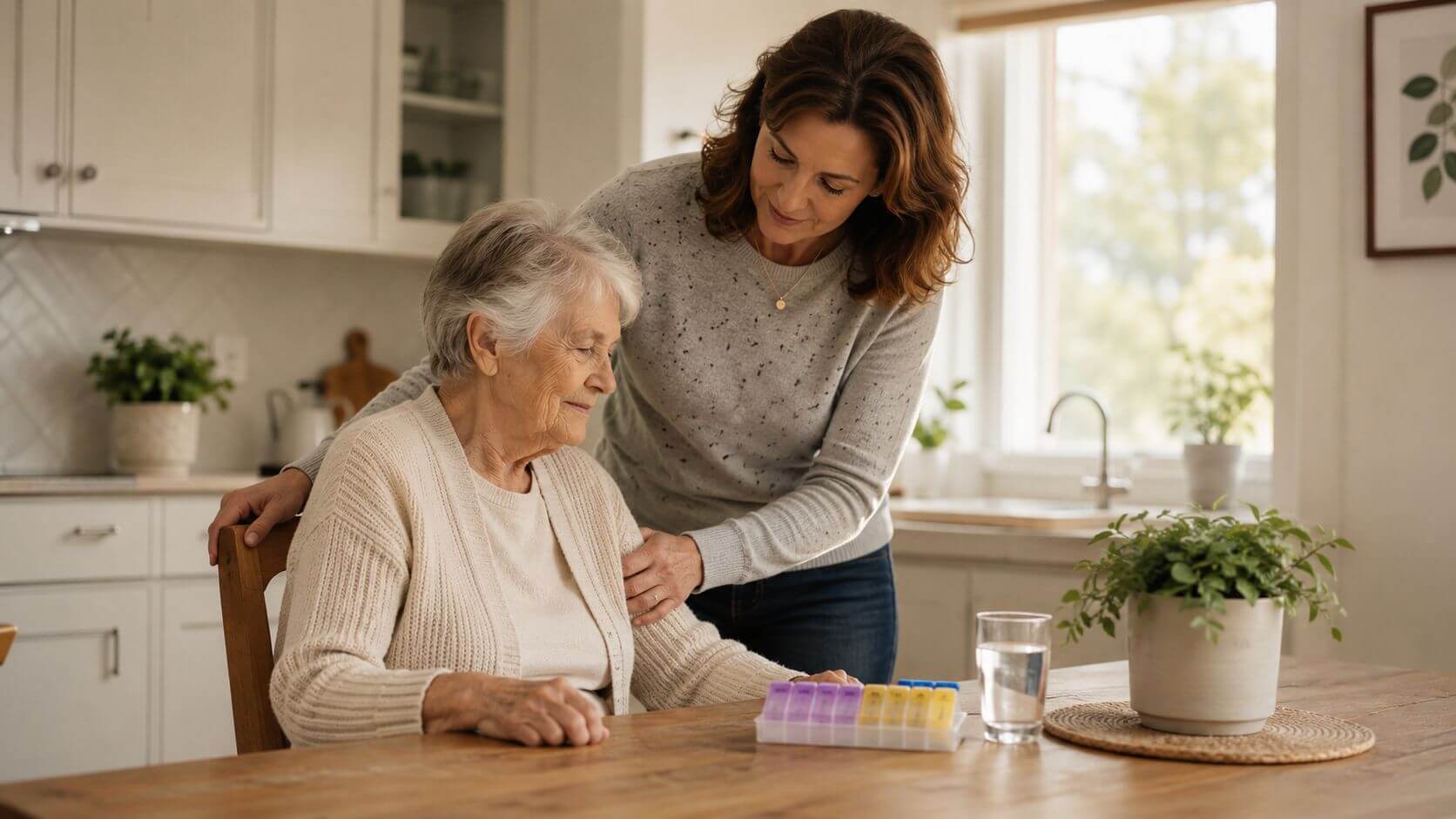
A day that starts in coordination mode
What many families find out too late is that help doesn't start when you do something. It starts when you anticipate. A caregiver often checks the hours, cross-checks the information, prepares the documents, and keeps in mind what everyone said the day before.
This invisible presence looks like a control tower. Sophie does not pilot the disease, she avoids ruptures in her mother's life, which changes everything for home maintenance. This is where we understand the difference between a one-off gesture and a fundamental role, more diffuse, more continuous, but also heavier.
The mental burden of the caregiver is this work that never really stops, even when the helper sleeps.
In essence, the day of a caregiver is not made of a great heroic act. It is made of dozens of micro-decisions, reminders, arbitrations and small repairs of the daily. That is precisely why a simple word, Caregiver, actually refers to an entire organization of life.
Understanding how to become a family caregiver
What the definition of a caregiver really says in France
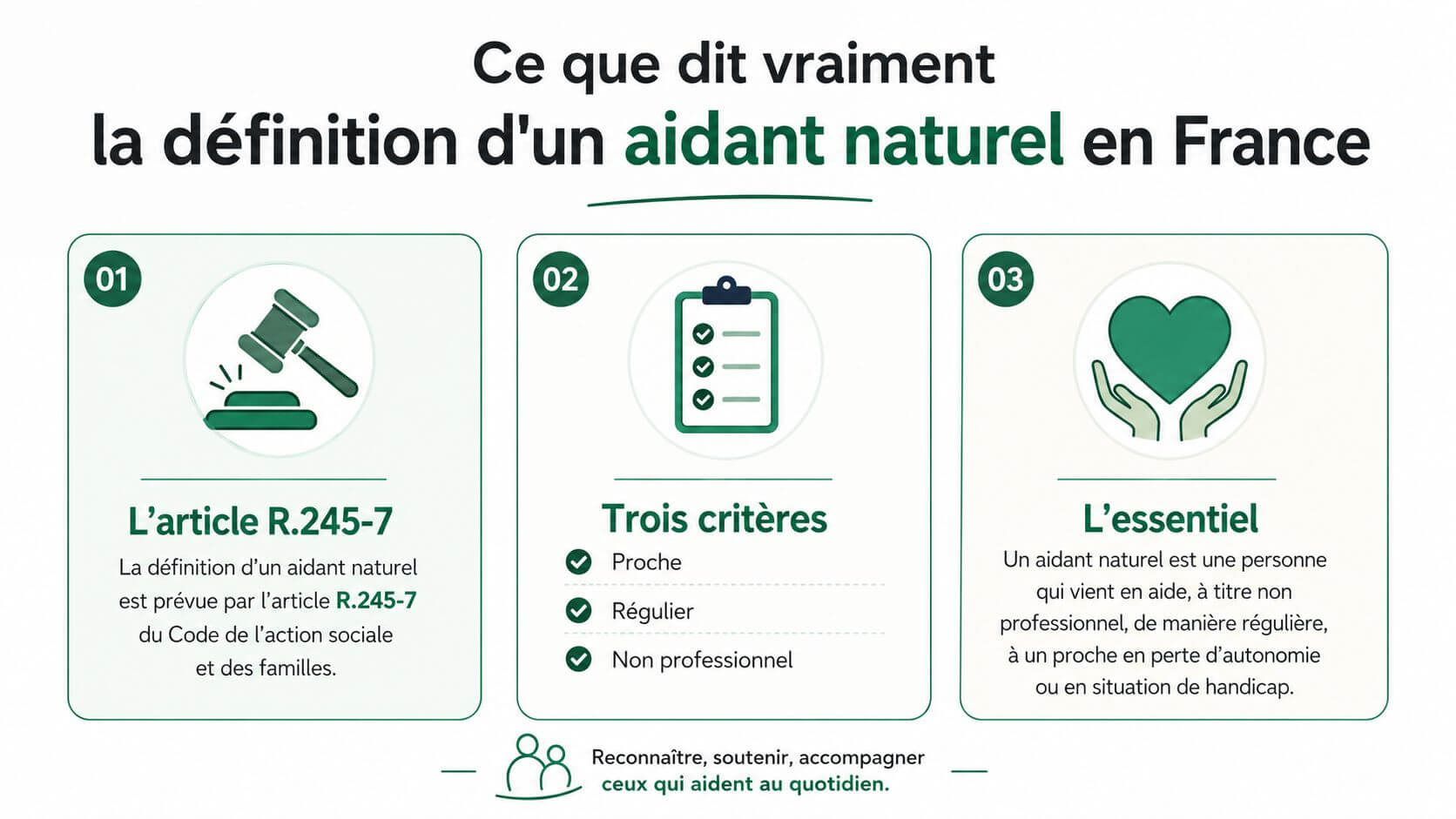
The first criterion, aid to a relative in loss of autonomy
The most solid base is at the end of the day.Article R.245-7 of the Code of Social Action and Families. It applies to the spouse, the partner, the partner of PACS, an ascendant, a descendant or a collateral up to the 4th degree, as well as the same ties for the other member of the couple, provided that the human aid is not paid. This definition, relayed by French sources, clearly distinguishes informal assistance from professional assistance and falls within the scope of disability and loss of autonomy (legal and medical-social source).
In concrete terms, this means that a caregiver is not only "someone in the family". The decisive point is the help given to a person who needs support in daily life, with sufficient regularity to weigh in the organization of every day. The link may be family, but the function counts as much as the link.
The second criterion, regular and non-professional assistance
French vocabulary often mixes Caregiver, family helper and close helper. The first is mainly a common term, the second insists on kinship, and the third is the most widely used term in current texts, with a definition based on regular, frequent, unprofessional assistance, provided for all or part of the acts of daily life (official guide on the caregiver, DREES benchmarks).
This nuance avoids frequent confusion. A person can be a caregiver without being paid for it, without a diploma as a caregiver, and sometimes even without a blood link. Conversely, a one-time family worker is not always enough to create a recognized status in the procedures.
The idea to remember without jargon
Simple practice, If the aid becomes regular, organized and indispensable in everyday life, we are no longer in the simple support visit.
In France, an important historical landmark remainsArticle L.1111-6-1 of the Public Health Code, which allowed a person with a disability to designate a caregiver to accompany him or her in certain actions prescribed by a doctor (legal reference of the course of care). This is an important recognition, because it shows that the caregiver is not only emotional support, it can also become a supervised support in care.
So the simplest thing is to remember this. definition of natural aid is based on regular, non-professional assistance to a dependent, sick or disabled person, and differs according to the context of the aid, the nature of the link and the mobilizable legal framework.
Natural aid versus health professional, two complementary logics
The health professional acts on the pathology with clinical expertise. The natural caregiver carries continuity of life, which is another form of competence, less visible but essential. The two roles do not replace themselves, they add up.
| Dimension | Natural Helper | Health professional |
|---|---|---|
| Presence | Daily, often diffuse, sometimes remotely | Programmed, linked to a specific intervention |
| Knowledge of the person | Very fine, built in the duration | Clinic, centered on health status |
| Main mission | Coordination, vigilance, emotional support, logistics | Care, technical gestures, medical surveillance |
| Relationship | Family, emotional, sometimes friendly | Professional, guided by rules and protocols |
| Useful tools | shared calendar, care journal, delegation of tasks | Caregiving, prescriptions, reporting |
What the land really reveals
The uses of a solution like Tribulys show this complementarity.shared calendar is used to visualize home passages, medical appointments and times when the family must take over. digital link book centralizes transmissions, which avoids losing a set in a text message or on a notebook left on the table. The delegation of tasks helps to clarify who does what without having to reexplain everything each time.
The important point is not just the tool, but what it reveals. The natural caregiver then appears as the focal point between family and stakeholders, the one that connects gestures, schedules and information. That's exactly what makes him a conductor of home maintenance.
See a practical guide on carers' coordination
A useful benchmark, Good information sharing never replaces care, but it avoids a lot of misunderstandings between people who work with the loved one.
Why this distinction changes everyday life
When everyone knows where to start and where to stop their role, the family breathes better. The professional can concentrate on the medical gesture, while the caregiver keeps the overall view, the priorities of the day and the relays of last resort. This distribution is often the only way to avoid everything being based on one person.
The legal framework and rights of the natural caregiver explained simply
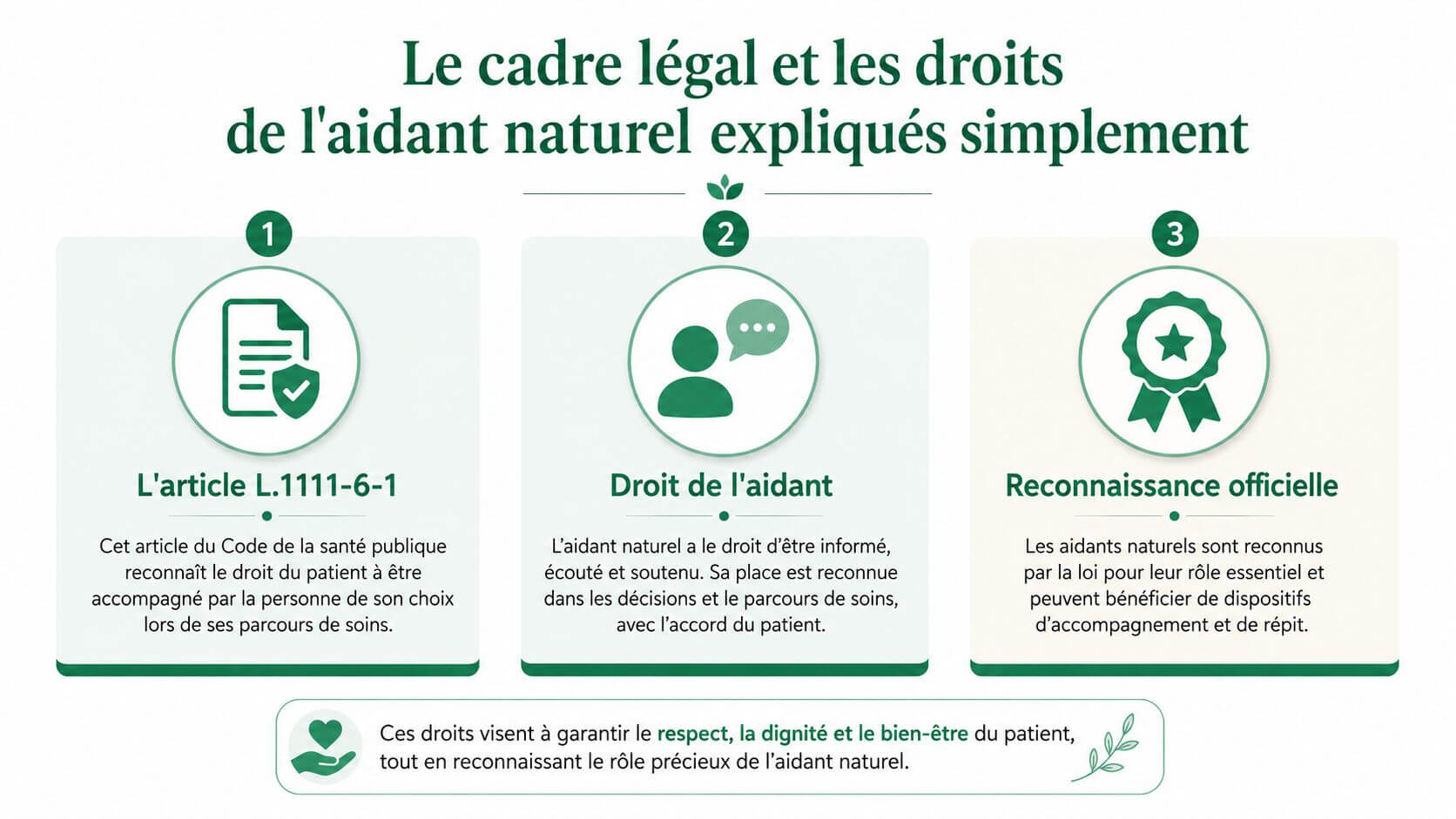
A Recognized Role in the Care Path
I-I-IArticle L.1111-6-1 of the Public Health Code was an important step in consolidating the caregiver's place in the care path. In some cases, a person with a disability may designate a natural aider to perform medically prescribed care in his or her place, provided that a health professional has provided the necessary learning (legal reference of the course of care). The logic is simple, the person receiving care retains autonomy, but he can rely on a trained relative for certain specific actions.
This recognition does not transform the caregiver into a caregiver. Rather, it frames an aid already present in the reality of the families. The challenge is to secure what is done on a daily basis without blurring the responsibility of the professional.
The concrete rights to be recognized
The Caregiver leave allows an employee to temporarily absent from work to assist a relative in loss of autonomy, with a duration of up to three months renewable depending on the scheme, and may be accompanied by a daily allowance when the conditions are met (practical information sheet) In addition to this,Automatic old-age insurance in certain cases, as well as right to respite, which opens up access to solutions such as day reception or temporary accommodation.
The idea is not to memorize a catalogue of acronyms. It must be understood above all that the law begins to recognize fatigue, the reorganization of working life and the need to breathe. It is a way of saying that helping a loved one is not supposed to be done at the expense of his own health.
When Formalization Really Helps
The role is best placed black and white in the procedures, notably through the CDMH file and the custom project. This formalisation avoids misunderstandings between what is the responsibility of the family, care and organisation at home. It also allows for better articulation of the exchanges with the teams.
Formalizing the role of the caregiver is not to bureaucratize the relationship. It is to secure the relays and make the help more tenable over time.
In practice, therefore, the legal framework serves two purposes. It protects the caregiver, and it clarifies the place of each person around the person receiving care. It is often this framework that allows you to stay on time without constantly exhausting or improvising.
Tribulys, the application that transforms the role of the natural caregiver into practice
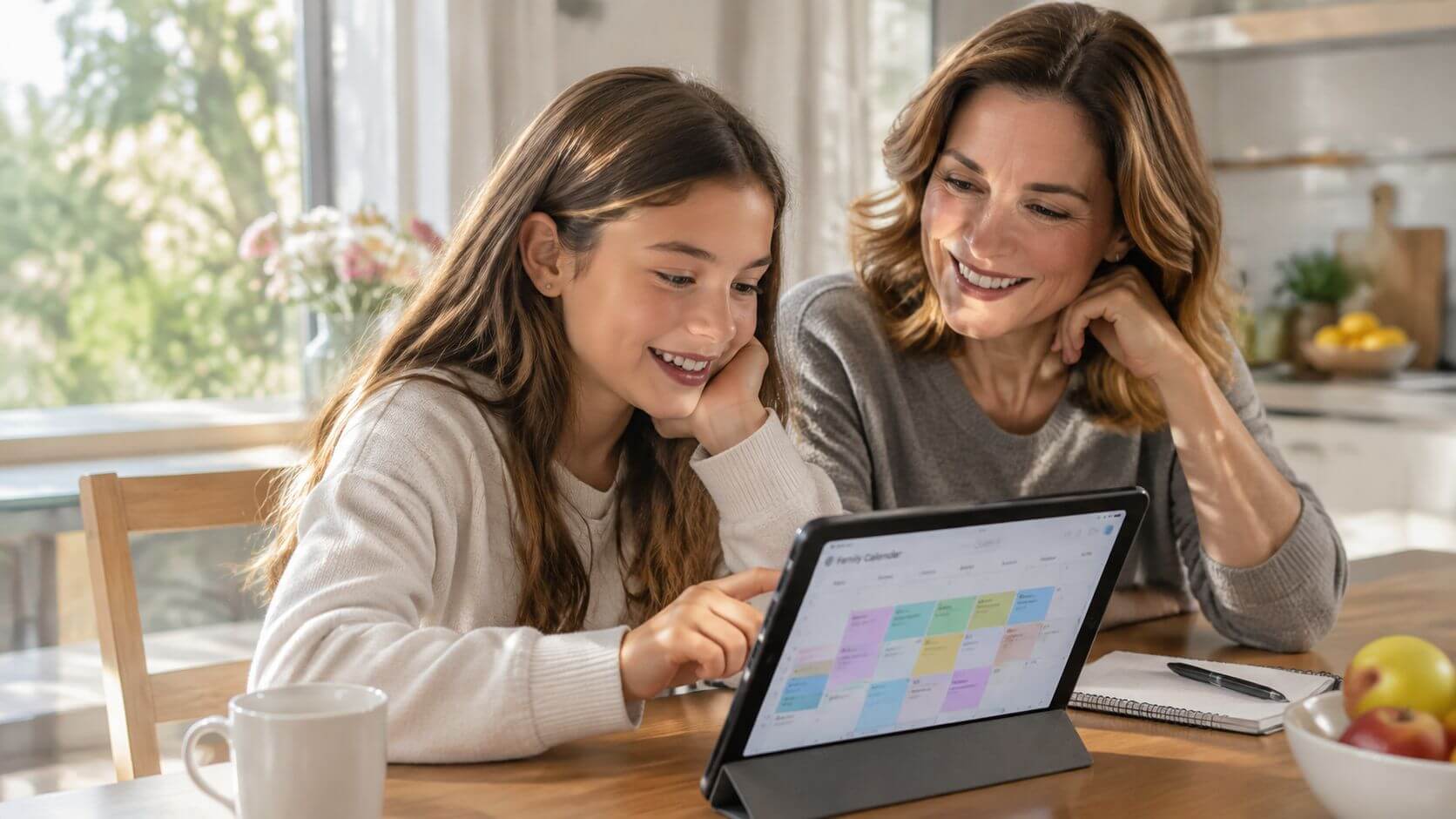
In the morning, Sophie no longer opens three conversations and a paper book to know who is passing, who is calling, and who has taken what note. She looks at the shared calendar, sees the passages of the week, the medical appointments and the times when her presence is necessary. This simple display already prevents her from wearing all the planning in her head.
On Tribulys, the shared calendar combines with a digital link book. The nurse, physiotherapist and brothers can leave a clear, dated and visible transmission by the right people. Information is no longer lost between the kitchen, telephone and family group, which changes the quality of the relay.
A little later in the day, Sophie uses the function of delegation to assign a specific task to her brother since his work. He knows what to do, when to do it, and with what context. This logic of sharing reduces the mental burden because it turns a blurred coordination into named actions.
What the family earns every day
The value of a family coordination tool is not just about comfort. It concerns the traceability of transmissions, the visibility of tasks, and the possibility of circulating information without repeating ten times the same thing. The natural caregiver can then regain a little mental distance, without losing the wire.
Discover the application solution for family caregivers
In this type of organization, the close helper sometimes becomes son, daughter, spouse or brother again, instead of being permanently the invisible coordinator of everyone. It is a profound shade, because it touches the emotional place as well as the logistics.
A good organization at home does not remove fatigue, but it avoids fatigue turning into chaos.
Tribolys remains here an example of a collaborative and unmedicalized tool. It is used to structure exchanges, not to replace caregivers, and it is precisely this positioning that meets the concrete needs of families.
Warning signs, aids and resources to support the natural caregiver
Persistent fatigue is often the first signal. When it settles down, whether it no longer spends with a correct night or a quieter weekend, it is necessary to start looking closely at the situation. Social withdrawal, irritability, guilt, forgetfulness of one's own appointments or physical pain related to handling are also among the signs to be taken seriously.
Aid to be mobilised without delay
Several relays exist in France, and they are not reserved for extreme situations.APA via the Departmental Council, the Complementary PCH, the Carers' homes, the CASS, associations as France Alzheimer's, With our close friends or Fondation France Répit, as well as respite platforms, day reception and temporary accommodation, can help build a real breath in the accompaniment. 0 800 97 09 70 and Service Hello Helpers are also useful entry points not to remain alone.
The attending physician remains a central interlocutor when exhaustion begins to affect health. CLIC It can also open rights or point to the right relays, especially when the family organisation becomes too tight. Asking for help does not remove anything from the commitment, on the contrary, it makes it lasting.
What really helps to hold
Aidance often wears out when everything rests on one person. As soon as a concrete relay is set up, things change, even if it takes time at the start. A daytime reception, a one-time presence, or a clearer division of tasks can be enough to loosen the vice.
Seeking support is not a confession of failure. It is a way of protecting the relationship with the person receiving care.
In practice, many caregivers wait too long to lift their feet. However, the body speaks before total discouragement, and the help network exists precisely to avoid getting there. The sooner you act, the more likely it is to last without breakage.
The key to the definition and role of the natural caregiver
The definition of natural aid holds in a simple idea. It is a non-professional person who provides regular assistance to a dependent, sick or disabled relative. Behind this formula, however, there is a much wider reality, made up of schedules, anticipation, vigilance and coordination.
Its role goes far beyond one-time support. The natural caregiver is often the one who connects the family, professionals and daily life, so the one who guarantees the continuity of home care. This position at the border of the medical and family explains why the distinction between caregivers, caregivers and caregivers deserves to be clarified.
The resources exist, and they count. Caregiving leave, the right to respite, relaying solutions, support platforms and digital coordination tools give families valuable breathing margins. As the usages structure, we also see a simple idea, aid is not only about good will, it is about the organization shared.
The future of family accompaniment will undoubtedly require more sharing between caregivers, more remote respite, and even more legible recognition of this essential role. The tools that centralize the agenda, the transmissions and the tasks have already begun to transform the mental load into concrete organization. This is where the daily life becomes more tenable, for the person assisted as well as for the one who looks after it.
If you accompany a relative and want to get out of the scattered coordination, Tribulys centralizes the agenda, transmissions and shared tasks in the same space. It is a simple way to better organize daily life at home, to keep a clear view of relays and to make aid more sustainable over time.
Put this organisation into practice with Tribulys
Keep your care journal, shared calendar, tasks, medication tracking and emergency information together. Start for free and invite the relatives and professionals involved in your loved one’s care.