
You've already seen the scene. IDEL passes, nobody has noticed that the kine came the day before, the girl who coordinates remotely believes that an appointment is maintained, and the paper notebook remains on the kitchen table. Result, one more call, one more doubt, and a family that ends the day with a full head.
When you look which shared calendar to chooseWe're not just looking for a nicer calendar. We're looking for a tool that avoids duplication, reduces forgetfulness, keeps the right information in the right place, and doesn't leave all the mental burden on one person. In France, this pressure is massive, with between 8 and 11 million caregivers, either about 16% of the population, and 61 % of those in active employment, 9.8 hours per week on average spent on the aid of a relative (France Work).
| Tool family | For whom | Strong point | Main limit |
|---|---|---|---|
| General public calendars | Single family, light use | Rapidity, familiarity | Governance of access too weak |
| Generalistic collaborative tools | Small teams, organized groups | Share more flexible, sometimes more readable | Limited traceability for the home |
| Home coordination platforms | Families, carers, carers | Roles, history, transmissions, alerts | More structured, so less "immediate" |
So the right choice depends less on the number of colors in the interface than on how you manage it. accesses, passages and contingencies. This is where conventional comparisons are often wrong.
Contents
- Introduction to Choose Your Shared Calendar
- Overview of shared agendas available in France
- The decisive criteria for comparing shared agendas
- Detailed analysis of options to address real home needs
- Which shared calendar choose according to your usage scenario
- Quick Method for Determining and Estimating Costs
- Our recommendation and next steps to start
Introduction to Choose Your Shared Calendar
The real test of a shared calendar is not the moment when everything is quiet. It is the morning when an appointment is moved, where a replacement speaker arrives, and when two people each believe they have warned the other. At that time, a simple calendar can show an hour. It does not always show who has confirmed, who has seen the information, or what has been transmitted.
In France, the use of the home confirms the extent of the subject. At the end of 2024, 832 000 persons were receiving APA at home, compared with 561 000 in institutions, and IGAS estimates that 8.3 million the number of people helping in everyday life (INSEE). In other words, home coordination is not a marginal case. It is a common use, with several actors, often dispersed, sometimes pressed, and not always connected to the same place.
What we really want to avoid
In practice, misses almost always come from the same things, a text message read too late, an information written on paper and then forgotten, or a modified passage without updating for everyone. So a good shared calendar must do more than synchronize slots. It must help decide who sees what, keep track of changes, and limit unnecessary return trips.
Simple rule, If your organization is based on transmissions, replacements or home visits, do not choose a calendar as you would choose a team meeting tool.
This is also why this search deserves a clear answer. An autonomous parent, a family that follows a few appointments, and a tribe that coordinates IDEL, kine and auxiliaries do not need the same level of tool. So the right decision starts with the context, not with the list of features.
Overview of shared agendas available in France
In the field, three families are often confused when they do not have the same use at all. general public calendars Like Google Calendar, Outlook or iCal are used to display dates and slots. generalistic collaborative tools and flexibility. Home coordination platforms go further, with access rights, transmissions and history to the center.
Three families, three logics
General public calendars are simple and fast. This is their advantage. It is also their limit as soon as you have to restrict visibility, follow changes or distinguish roles. For a light family coordination, they do the work. For an organized home with several stakeholders, they quickly become too open.
Generalist collaborative solutions occupy a useful in-between. They are suitable for sharing appointments, organizing simple tasks or distributing events. Joynit for its quick grip and simple sharing. The strong point is there. The weak point too, if you are looking for real access governance.
Home coordination platforms meet another need. They are not only used to set timetables, they make passages, transmissions and access rights legible. This is precisely the case with Tribulys, thought for the organization around a loved one helped, not for a standard calendar.
What this cartography does change in practice
The real sorting begins here. If you note a few family appointments, a general public tool is often enough. If you coordinate several stakeholders around a relative, you have to look at the management of roles, the trace of changes and the readability of passages. That's where the general public comparisons pass the subject.
A good shared calendar must not show everything. It must show the right level of information to the right person, without losing history.
In the home help, situations move quickly, a replacement arrives, a passage jumps, a visit shifts, a notice changes. A simple calendar remains convenient, but it doesn't hold when you need to avoid duplicates and keep reliable information for everyone. That's why you have to choose with a real professional look, not only with a list of features.
The decisive criteria for comparing shared agendas
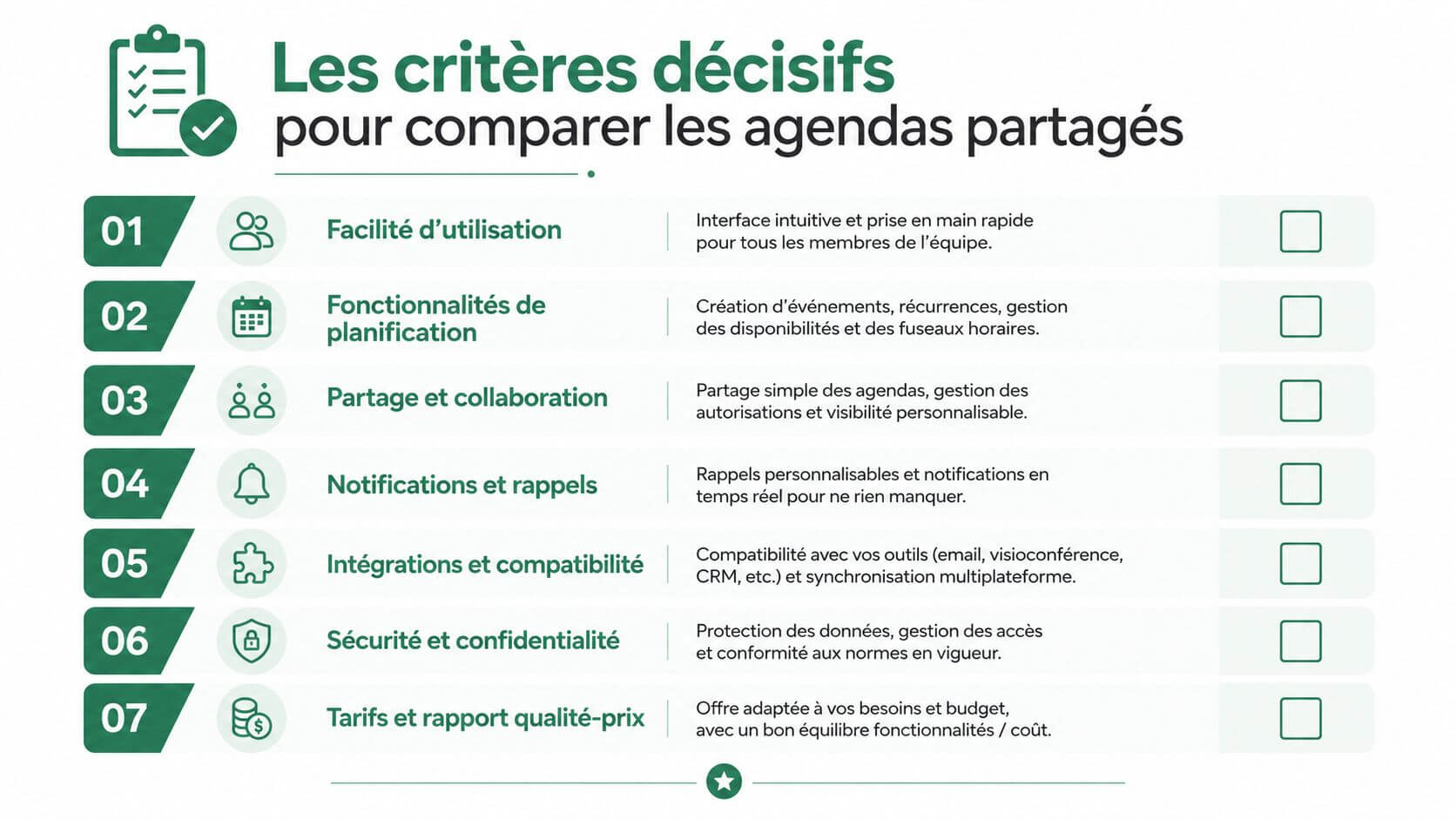
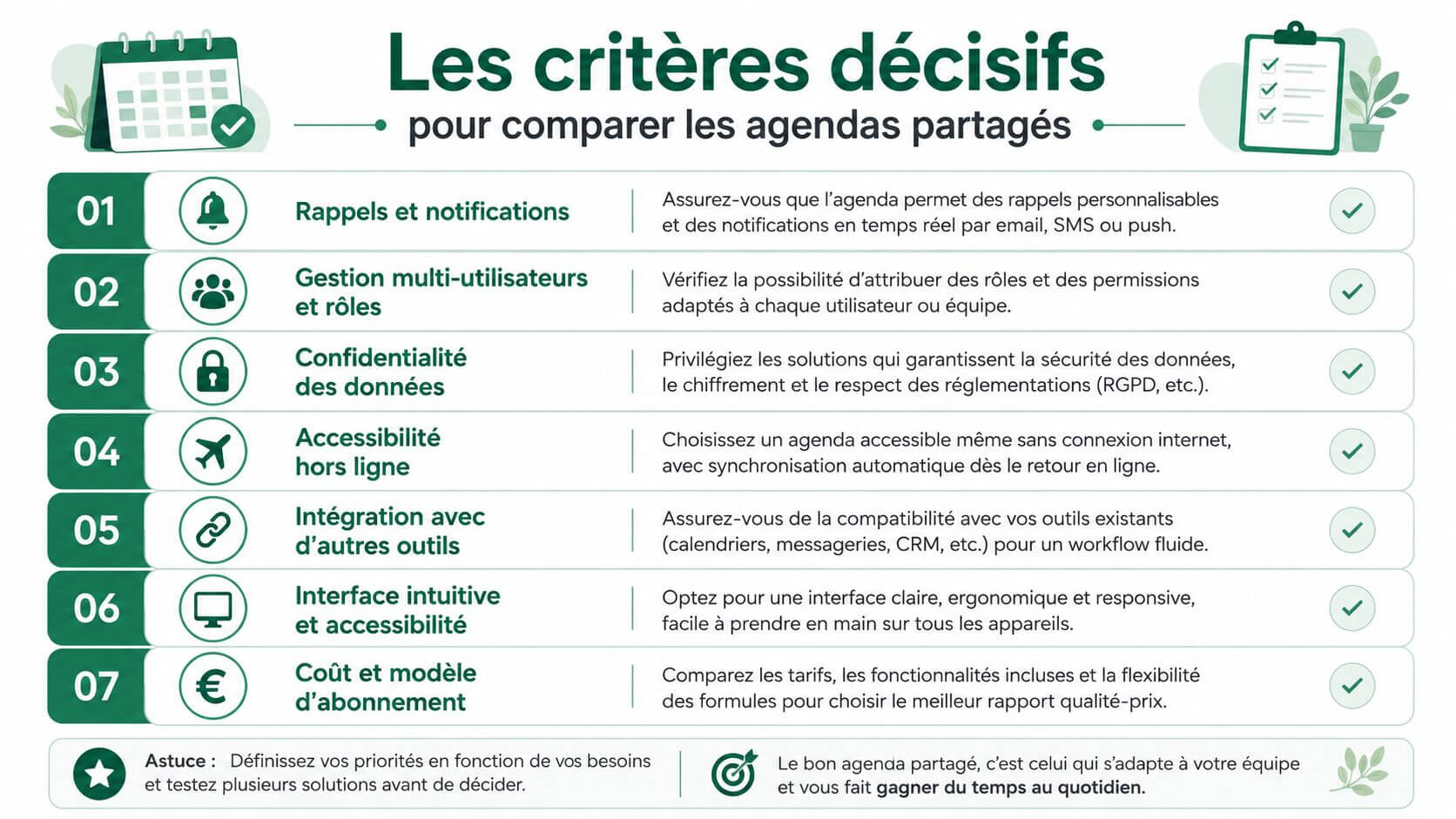
The first filter is Alert. If the tool does not know how to restart at the right time, you will fall back into calls and SMS. So you have to check the fineness of the notifications, their setting, and the possibility of receiving them without everyone being drowned under the messages.
What really matters in everyday use
The second point is that multi-user management and roles. A remote helper does not have the same rights as a kine, and a replacement does not need to see more than the strict necessary. So look for a solution that allows you to invite by name, to grant different permissions, and to limit the exposure of the data.
The third point is: traceability. You need to know who added what, when a passage was changed, and what was transmitted. Without history, the calendar quickly becomes a simple window, not a coordination tool.
Fourth point: offline. It becomes useful as soon as a stakeholder moves, gets wrong, or needs to consult information in a place without a reliable network. If offline access exists, it must remain clear and synchronize properly afterwards.
Health criteria, not to be treated lightly
Priority health criterion, the France Num guide recalls that a processing manager must verify that the subcontractor presents sufficient guarantees within the meaning of Article 28 of the GDPR, and the ANS describes a part of managing shared agendas with synchronisation and resource management (Appvizer).
In this context, security is not a bonus. You have to look at logging, data export, hosting in France or in the EU, and access controls. For health use at home, these points pass before the little interface comforts.
The five questions that quickly settle
- Reliable notifications, so that changes are not based on a single message.
- Separate roles, to open only what must be.
- History of events, to keep the memory of the passages.
- Clean synchronization, to avoid conflicting versions.
- Accommodation and compliance, to stay in a sustainable environment if sensitive data circulates.
The right tool is therefore not chosen "on the product sheet". It chooses from governance. That's why classic comparatives help at the first sorting, but are not enough to keep at home. For a complementary benchmark on the coordination of care, the Tribulys guide on the choice of a coordination tool remains useful.
Detailed analysis of options to address real home needs
A general public agenda displays a date, an hour, sometimes a place. For a family that only wants to check an appointment, this is often enough. The real problem arises as soon as several people change the same information and no one knows which version is authentic.
General public or business tool, it's not the same battle
Google Calendar or Outlook reassure because they are simple and already known. However, they remain focused on planning, not on access governance, traceability of passages or respect for medical confidentiality. They synchronize well, they misunderstand the flow of information.
Generalistic collaborative tools go further on sharing. Joynit It is often cited for field teams because of a quick grip and friction-free sharing. For multi-stakeholder uses, it also requires synchronization between users, reminders and clear access delegation (La Fabrique du NetIt's closer to need when you need to go fast.
But as soon as we have to trace the transmissions or limit the exposure of the data, their limits become visible. An IDEL which must see only its passages, a replacement auxiliary who needs only a niche, or a remote helper who consults without changing, all this requires rights thought from the beginning.
What generalist tools don't do well
General public calendars know how to share schedules. They know much less well how to organize differentiated access rights.
The home does not work as a meeting schedule. There are unforeseen events, absences, last minute replacements and short transmissions that must remain legible. Without a digital link book, no passage history and no dedicated messaging, the calendar alone ends up creating confusion.
The week or month view keeps its interest. It is not enough if it is not accompanied by clear roles, a logbook and a follow-up of visits. At home, reliability counts more than design.
Comparison of calendar shared according to home criteria
| Criterion | Google Calendar / Outlook | Joynit / Acollab | Tribulys home coordination |
|---|---|---|---|
| Roles and rights | Basic | Intermediate | Structured and segmented |
| Traceability of passages | Low | Variable | History and transmissions |
| Adapted to contingencies | Limited | Medium | Yes, with dedicated tracking |
| Multi-actor visibility | Yes, but wide | Yes | Yes, with fine control |
| Home use | Part | Closer | Central |
The choice is clear. To make a few appointments, the generalist tools are sometimes enough. To coordinate a real home, you need a working structure that does not rely on the memory of people. If you want to keep a clear steering, the calendar is only a part of the system.
Which shared calendar choose according to your usage scenario
A family that organizes a few visits for a parent who is still independent does not need a complex device. The main risk here is dispersion. A single shared calendar, simple reminders, and a clear reading logic are often enough. In this case, I recommend a light tool, provided that it remains readable on mobile and that everyone accepts a simple rule, a single source of truth.
If you coordinate regular passages
As soon as care is repeated, logic changes. The caregiver is no longer only recording appointments, he orchestrates passages, confirmations, and sometimes replacements. There, a generalist collaborative tool can troubleshoot, but it quickly reaches its limits if it is necessary to keep a clear trace of what has been done.
The real challenge is to adapt the agenda to differentiated rights and nominative invitations because medical secrecy remains strictly regulated, which the general public calendars do not deal with (Essential AutonomyThis is the point that makes the choice shift towards a more structured solution.
If the family and the professionals mix
This is the most common scenario, and the most fragile. A girl coordinates from another city, a kine changes her niche, an auxiliary is replaced, and everyone has to keep the thread. In this case, I advise to get out of the classic family calendar and move on to a platform that manages both the agenda, the transmissions and the roles.
For a benchmark on the border between informal messaging and organized follow-up, the WhatsApp vs. Medical Tracking App helps to cut without telling each other stories. WhatsApp can speed up the exchange. It does not structure coordination.
Three net recommendations
- Self-contained parent and light use, Take a simple calendar, but impose a seizure discipline.
- Helped with recurring passages, Choose a collaborative tool with reminders and own sharing.
- Multi-stakeholder home coordination, Take a solution thought for roles, history and transmission.
The right tool is not the one that makes fun on the first day. It is the one that stays readable when someone falls ill, goes on vacation or replaces the raised foot.
If you still hesitate, this is often the sign that you are trying to bring in a need for coordination in a too simple calendar tool. At home, this is rarely a good idea.
Quick Method for Determining and Estimating Costs
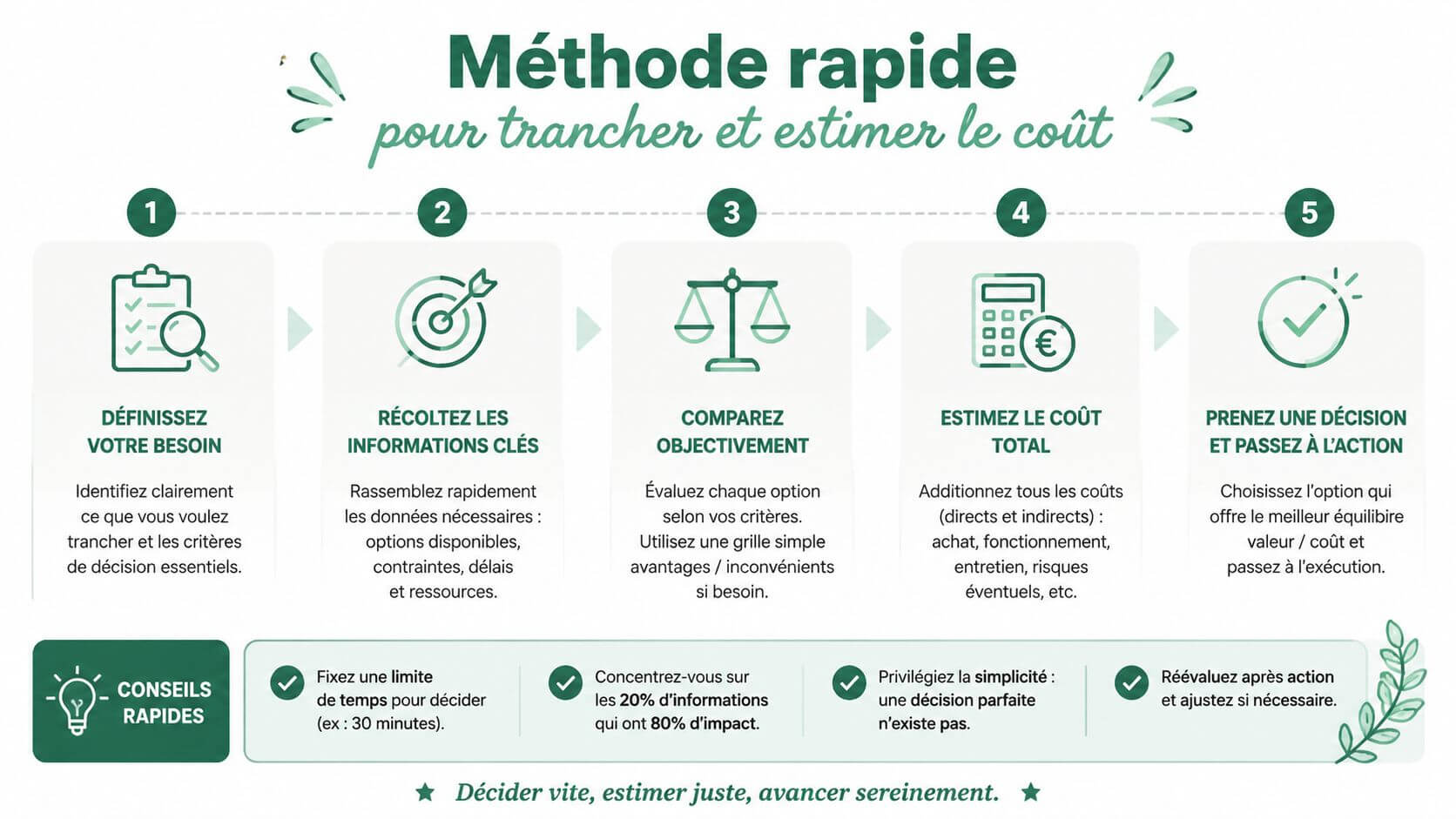
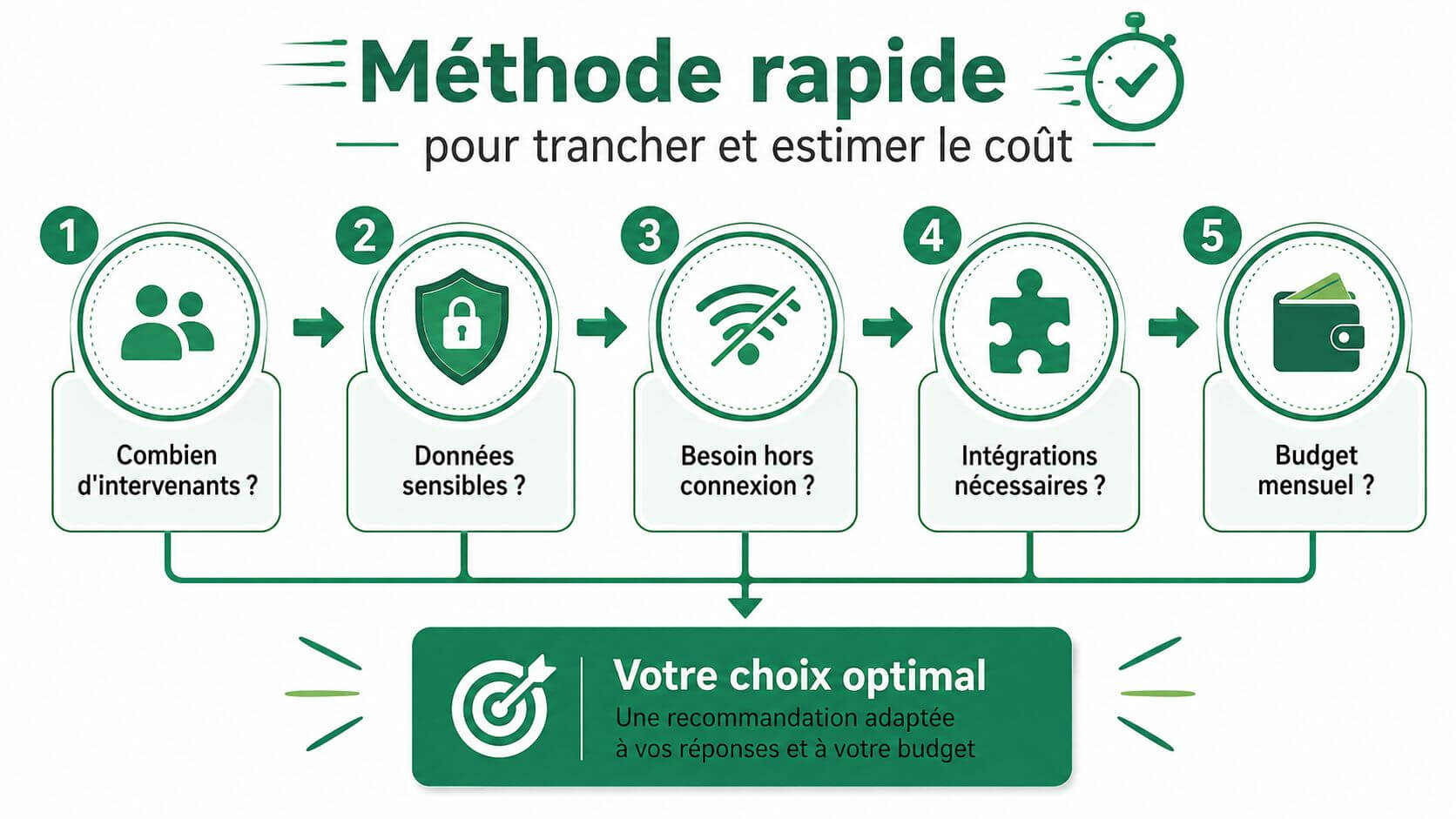
Take five minutes and answer five questions frankly. How many speakers need to see or change the calendar. Are there sensitive data? Do you need to consult offline. Do you need a history of the passages. And how much friction you now cost for manual coordination.
The most useful decision rule
If you are on a simple use, a free tool may suffice. But as soon as the coordination becomes repetitive, the hidden cost of free goes up quickly, calls, messages, duplicates, forgets, and time spent pasting the pieces. That time does not appear on the bill, but it ends in your week.
From a tariff point of view, Tribulys proposes a plan Free essential for life up to 5 members and a plan Family at 5,99 €/month. I simply say, this benchmark is useful if you compare the cost of a structured tool with the real cost of everyday DIY. If your organization needs a logbook and a history of passages, the real question is not the facial price, it's the charge avoided.
The coordination depends mainly on the management of absences, replacements and short transmissions with logbook and history of passages, a challenge reinforced by the decree of the 19 August 2025 on home replacement benefits and assisted respite stays (UDAMAD). This is precisely the kind of situation where the agenda alone is no longer enough.
Your quick slicing
- Less than 3 actors, simple calendar.
- Several speakers with different roles, collaborative tool.
- Need for transmissions, history and replacements, Home coordination platform.
The right arbitration is not only budgetary. It is operational. A free tool that is ill-adapted often costs more than a modest but structured tool, because it forces you to compensate elsewhere.
Our recommendation and next steps to start
My opinion is simple. If you manage a light family life, Google Calendar or Outlook may be enough. If you need a little more flexibility for groups or field teams, Joynit or Acollab make sense. But as soon as you coordinate a home maintenance with several stakeholders, you need a platform that treats the roles,historical background and transmissions, not just the schedule.
In this case, take a tool designed for coordination rather than a relooked generic calendar. This is the only way to keep a clear view when replacements multiply and sensitive information must remain segmented. This is also why you avoid turning a simple organization into an emergency.
Start by creating the tribe, inviting people by name, settling fees, and then testing a week in sight week or month. If the tool doesn't hold when a passage changes at the last minute, you already have your answer. And if you want a friction-free start, with France/EU hosting and a home-friendly structure, look at what Tribulys offers.
Tribulys centralizes the agenda, the care journal, the tasks and the exchanges to coordinate close caregivers and professionals around a patient at home. If you are looking for a solution thought for differentiated rights, transmissions and real passages, go see Tribulys and test if logic is right for your organization.
Put this organisation into practice with Tribulys
Keep your care journal, shared calendar, tasks, medication tracking and emergency information together. Start for free and invite the relatives and professionals involved in your loved one’s care.