
In 2022, nearly 7.1 million people regularly accompanied a fragile loved one in France. Behind this figure are spouses, children and parents who, often without naming him, carry a significant part of the care path.helping a person with a chronic disease does not mean replacing caregivers, but organize, monitor and support on a daily basis. To lay a solid foundation from the start, see our Guide to Home Rights and Helpers.
This accompaniment is built in the long term, sometimes for years. a study of DREES, these 7.1 million caregivers represented about 11% of the population aged 5 or older in 2022. Understanding your role, limits and rights is the first step to keeping up without exhausting yourself.
Understanding the role of caregiving in chronic disease
The relationship of " chronic disease aiding " covers a wide range of realities. You can help a parent after a stroke, a child with a disability or a diabetic spouse. The common point remains that regular and non-professional assistance to a person whose autonomy is reduced.
This support takes many forms: domestic chores, hygiene, administrative procedures, psychological support and treatment supervision. DREES states that in 2022, caregivers were most often accompanied by a parent, spouse or child, and that they were mostly women, on average nearly 53 years of age.
One point deserves your attention: to recognize that you are a close helper is not a confession of weakness. This is the prerequisite for access to your rights and support mechanisms. Many caregivers never define themselves as such, which delays access to aid.
Impact on your health and life
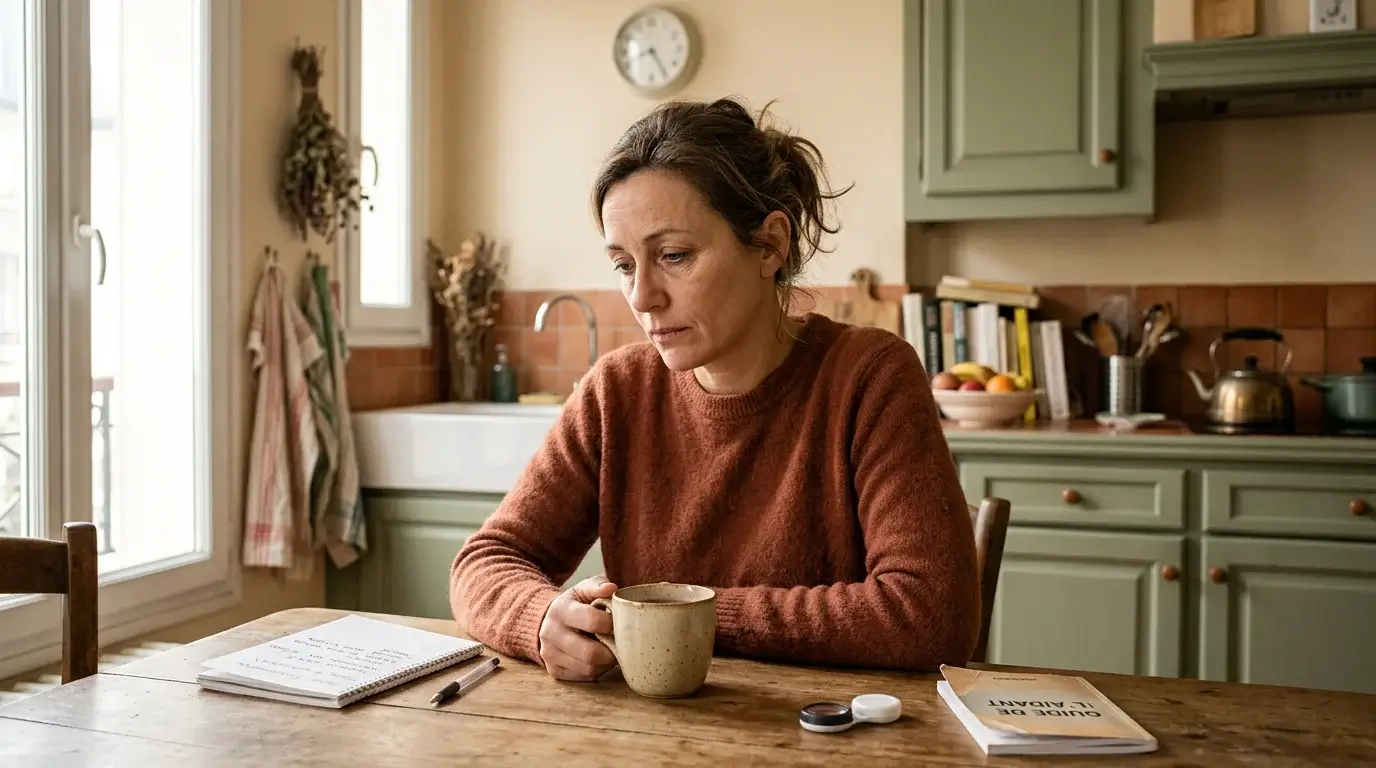
The accompaniment of a loved one weighs on your balance. Stress, sleep disorders, irritability and isolation often settle gradually and silently.Exhaustion of the Helper is a real risk, rarely anticipated.
The burden is all the more heavy when it is lonely. According to the DREES, three out of ten caregivers accompanied their loved ones alone in 2022, without any co-helper, a particularly common situation between spouses. This lack of relay increases the negative impact on health and social life.
In addition, there is conciliation with work. The same survey indicates that in 2022, 58% of caregivers worked, were looking for jobs or students. The helper burn-out The warning signs to be monitored are clear:
- Persistent fatigue despite rest;
- Disorders of sleep or appetite;
- Unusual irritability or sadness;
- A sense of isolation or loss of sense;
- Neglecting your own health.
From the first signs, talk to your treating doctor. Taking breaks is not abandoning your loved one: it is staying a quality support over time.
Coordinate home care without exhausting yourself
When several people intervene (family, nurses, physiotherapists, home care workers), the information disperses quickly. A text message here, a call there, a notebook left at home: no one has the overall view. Informal coordination generates errors and fatigue.
Structure the exchanges changes everything. A shared link book, a common schedule and a follow-up of the treatments allow each stakeholder to know what has been done. To organize this distribution, rely on our guide to co-ordination among caregivers.
We designed Tribulys precisely for that. Our application brings together family and healthcare professionals in the same space, with a time-bound and signed link book, a follow-up of medicines with warning in case of missed dose, and a shared calendar. It even works offline and synchronizes to the reconnection.
| Criterion | SMS / WhatsApp | Paperbook | Tribulys |
|---|---|---|---|
| Timely and signed care journal | No | Part | Yes |
| Automatic warning if missed dose | No | No | Yes |
| shared calendar with reminders | No | No | Yes |
| Family and Caregiver Access | Limited | On-site | Yes, by roles |
| Works offline | No | Yes | Yes, with my visit |
| Data hosted in France, GDPR | No | Not applicable | Yes |
Your rights and mobilizable financial aid
To accompany a loved one has a cost, both in time and in money. Several devices exist to relieve you. Caregiver leave allows you to suspend or reduce your activity, and can be compensated via the Caregiver's Daily Allowance (AJPA).
Other helpers target the helper. The Personalized Autonomy Allowance (APA) funds the needs of dependent elderly people; the Disability Compensation Benefit (PCH) covers certain disability-related expenses. Tax benefits, such as the employment tax credit for home help, complete the table.
These rights are part of a strengthened public policy. The national strategy "Acting for Caregivers" continues over the period 2023-2027, as recalled a response from the Senate published in 2026, with the deployment of the departmental public service of autonomy provided for by the law of 8 April 2024. To identify what you are entitled to, explore our resources on support for family caregivers.
Finding Respite and Daily Support

Respite refers to any solution that allows you to blow, while guaranteeing the accompaniment of your loved one. Day reception, temporary accommodation, home help: these devices are often unknown, but decisive to prevent exhaustion.
In France, accompaniment and respite platforms mesh the territory. Ministry of Health identify resources for caregivers and relatives. You will find there listening, psychological support and orientation towards suitable solutions.
Do not stay isolated. Specialized associations offer speaking groups and "coffee-makers' cafés", precious spaces for exchange with people living in similar situations. To organize the passages concretely and alleviate your mental burden, rely on our home help planning tool.
Many but still too invisible caregivers
Caregivers of the sick remain less visible than those of the elderly. an IGAS document published in 2024, 4.3 million caregivers were involved with elderly people and 4 million with people with disabilities, while those with chronic diseases were still poorly identified.
This invisibility has a cost: without recognition, no access to rights or respite. Inform you, name your role and seek help early, before the breakup, are the best reflexes. Coordination between relatives and professionals remains the most effective lever to last.
The essentials to be retained for the duration
Being thehelping a relative with a chronic disease is a deep commitment that deserves recognition and support. You are not alone: rights, respite devices and relays exist. The key is to act early, share the burden and protect your own health. Recognizing your limitations, structuring communication between stakeholders and accepting assistance in no way diminishes the quality of your support. On the contrary, it allows you to remain a reliable and present support, year after year.
Take action with Tribulys
Coordinating your loved one's care between family and caregivers should not be based on scattered text messages and a notebook that remains at home. You need a clear, shared and reliable overview, to know remotely what has been done and what remains to be done.

Tribulys centralizes the time-bound link book, the follow-up of medicines with alerts, the shared calendar and the messaging of your tribe, all hosted in France and compliant with the GDPR. our resources to organize home care and create your tribe for free, up to 5 members with the Essential formula.
Frequently Asked Questions
How do I know I'm a close helper?
You are close to helping as soon as you provide regular and non-professional assistance to a member of your family whose autonomy is reduced. This assistance can be material, medical, administrative or moral. If you recognize yourself in this description, you are helping, even without ever having defined yourself as such.
What financial assistance can I ask for as a helper?
You can mobilise the close care leave, compensated through the AJPA, as well as the APA or the PCH depending on the situation of your loved one. Tax credits also exist for the employment of a home helper. Get closer to your departmental council, the CDMH or a social worker to take stock.
How can we recognize the first signs of exhaustion?
Watch for persistent fatigue despite rest, sleep disorders, increased irritability and feeling isolated. These signals often settle down gradually and go unnoticed. If many are present at the same time, talk to your treating doctor without delay.
How can we better coordinate care between family and caregivers?
Centralize the information in a single space rather than disperse it between calls and messages. A shared link book, a common calendar and a follow-up of treatments avoid forgetfulness and duplication. Our Tribulys app brings together family and healthcare professionals around these functions, even offline.
Where can we find respite and support on a daily basis?
The Accompaniment and Respite Platforms, the Caregiver Associations and the Caregiver Cafés offer listening, orientation and relay solutions. The day reception and temporary accommodation allow you to blow a few hours or days. Your treating doctor remains a front-line contact to guide you.
Put this organisation into practice with Tribulys
Keep your care journal, shared calendar, tasks, medication tracking and emergency information together. Start for free and invite the relatives and professionals involved in your loved one’s care.